

Scroll through fitness social media and you’d think women need 200 grams of protein daily to lose weight. The reality is more nuanced and more achievable than the protein-obsessed culture suggests.
Protein matters for weight loss. It increases satiety, preserves muscle during a calorie deficit, and has the highest thermic effect of any macronutrient (your body burns more calories digesting protein than carbs or fat). That satiety effect only helps if hunger is the actual trigger, though. If you notice yourself eating when you’re not physically hungry, how to stop emotional eating is the more relevant fix. But the optimal amount for women is lower than what most fitness influencers claim, and the quality and timing matter more than most people realize.
Whole foods still matter alongside protein targets; here are the pros of eating bananas, according to a dietitian.
How Much Protein Do You Actually Need?
For women actively trying to lose weight while preserving muscle, research consistently supports 0.7 to 1.0 grams of protein per pound of target body weight per day. If your goal weight is 140 pounds, that’s 98 to 140 grams daily. Not 200. Not “as much as possible.”
Higher amounts (above 1.2g per pound) show no additional benefit for muscle preservation or satiety in controlled studies. They just crowd out carbohydrates and fats that your body needs for hormonal health, energy, and gut function. Women who chronically under-eat carbs in favor of protein often develop hormonal disruptions, including irregular periods and increased cortisol.
Does Protein Timing Matter?
Distributing protein evenly across meals matters more than total daily intake for muscle protein synthesis. Aim for 25 to 40 grams per meal, 3 to 4 times daily. The research on the “anabolic window” (eating protein within 30 minutes of exercise) is less significant than once believed – total daily intake and even distribution are what drive results.
If you’re cycle syncing, increase total calories including protein during your luteal phase when your metabolic rate rises 5 to 10%. Restricting food during this phase to “make up” for increased hunger backfires hormonally.
Best Protein Sources for Women
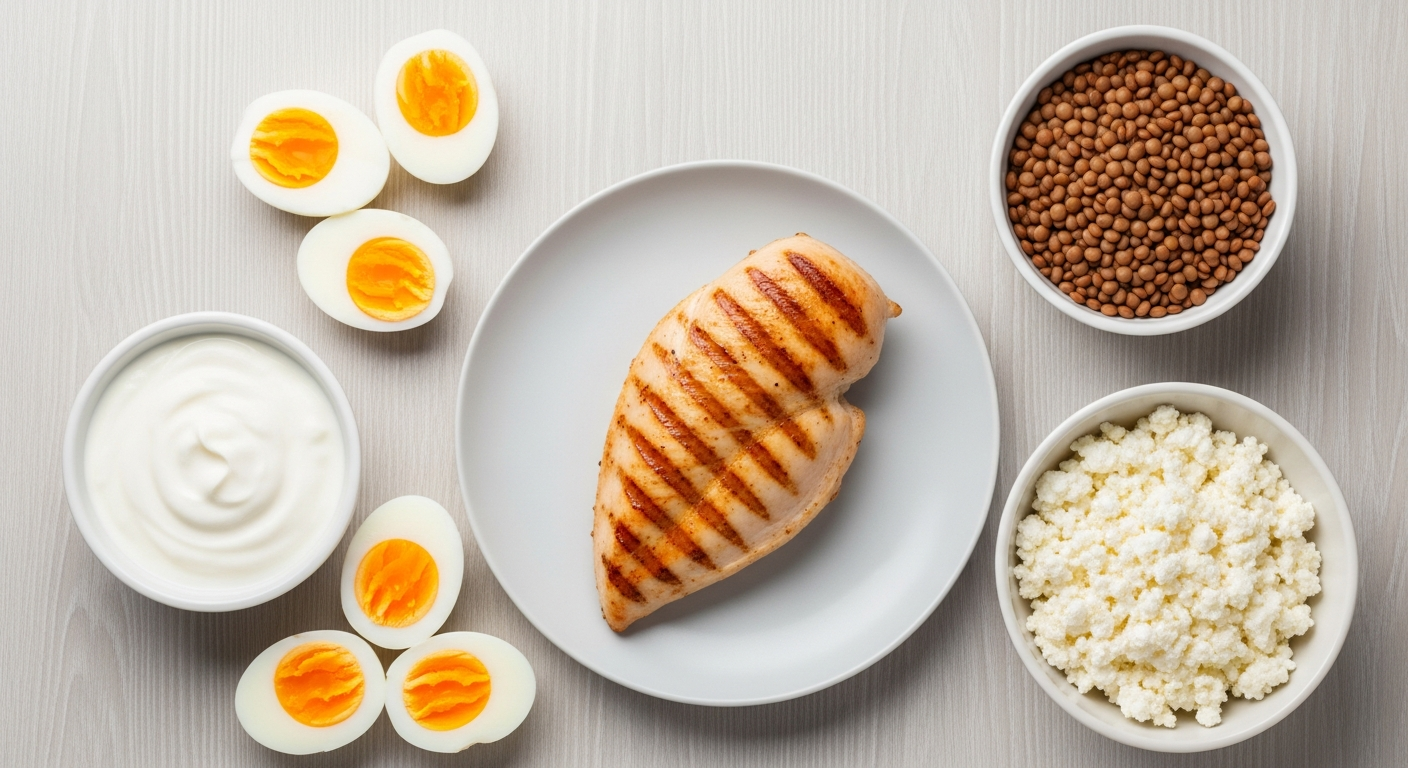
Prioritize whole food sources: eggs, chicken, fish, Greek yogurt, cottage cheese, legumes, tofu, and tempeh. These come packaged with micronutrients, fiber (in plant sources), and fats that protein powders don’t provide. Protein powder is a convenient supplement, not a foundation. If you use one, choose a third-party tested brand with minimal additives.
Don’t neglect plant proteins. Combining legumes with grains provides complete amino acid profiles, and the fiber in plant proteins supports the gut microbiome diversity that’s essential for hormonal health.
Frequently Asked Questions
Can too much protein be harmful for women?
For healthy women, high protein intake isn’t dangerous to kidneys. However, chronically excessive protein at the expense of carbs and fats can disrupt hormonal balance, menstrual regularity, and thyroid function. Balance matters more than any single macronutrient.
Should I eat protein before or after workouts?
Either works. The total protein consumed across the day matters more than precise timing. If you train fasted, eating protein within 2 hours post-workout supports recovery. If you ate a meal 2 to 3 hours before training, timing is less critical.