
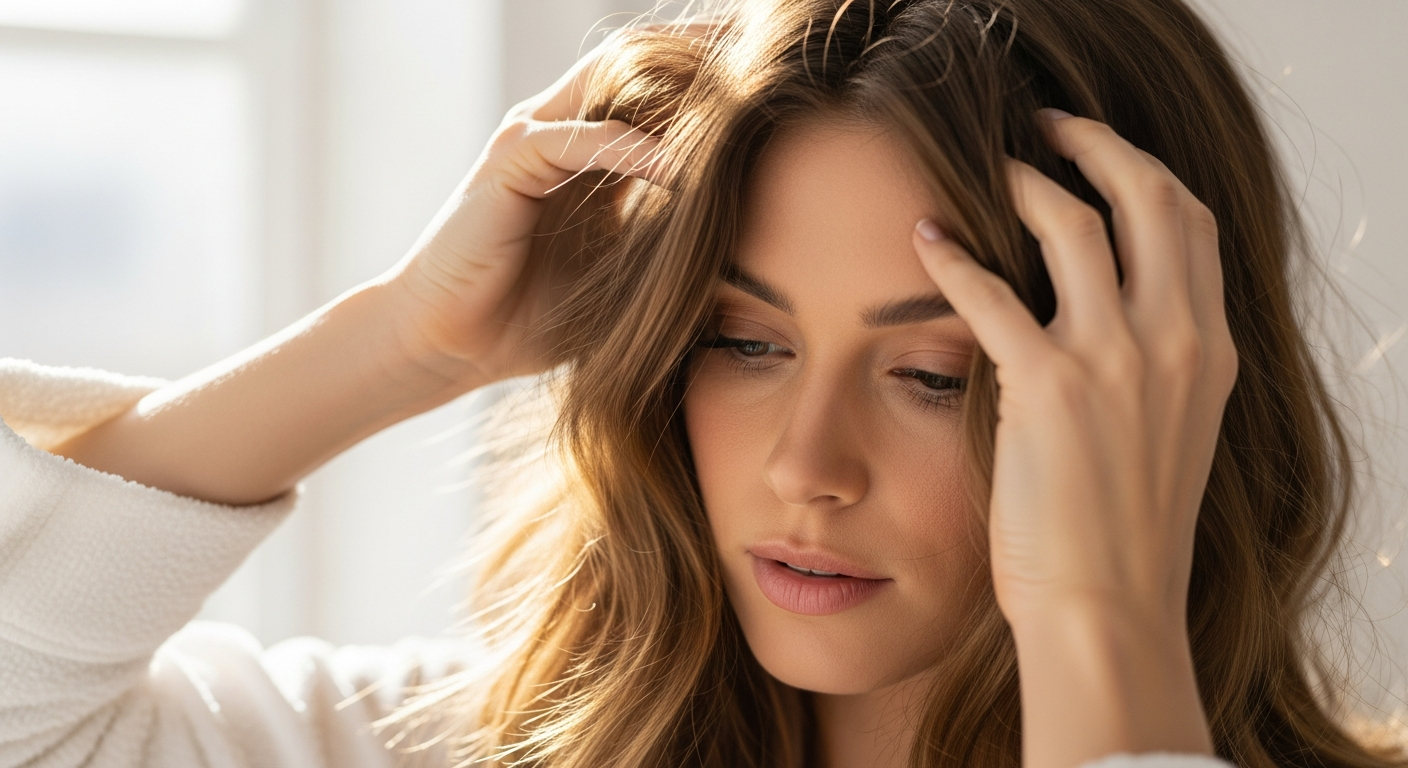

Losing 50 to 100 hairs daily is normal. But when your ponytail thins noticeably, your part widens, or you find clumps in the shower, something else is happening. Female hair loss affects approximately 30 million women in the US, yet it’s dramatically underdiagnosed because the pattern differs from male hair loss.
Most Common Causes in Women
Telogen effluvium is the most common type. Stress, illness, surgery, rapid weight loss, or hormonal shifts during perimenopause push more hair follicles into the resting (shedding) phase simultaneously. You notice increased shedding 2 to 3 months after the triggering event. The good news: it’s usually temporary and resolves within 6 to 12 months once the trigger is addressed.
Female pattern hair loss (androgenetic alopecia) presents as diffuse thinning across the top of the scalp rather than the receding hairline men experience. It’s driven by genetics and hormone sensitivity, and becomes more common during and after perimenopause as the ratio of androgens to estrogen shifts.
A flaky or irritated scalp can also make shedding look worse than it is. If you’re dealing with visible flaking alongside thinning, start with how to get rid of dandruff before assuming the worst about hair loss.
Thyroid dysfunction causes diffuse hair loss across the entire scalp. Both hypothyroidism and hyperthyroidism affect hair growth cycles. If hair loss coincides with fatigue, weight changes, or temperature sensitivity, get your thyroid panel checked.
Nutritional deficiencies – iron, ferritin, vitamin D, zinc, and biotin – all contribute to hair loss. Women who menstruate heavily or eat restrictive diets are particularly vulnerable.
What Actually Helps
Address the underlying cause first. Blood work including ferritin (not just hemoglobin), thyroid panel, vitamin D, and hormone levels provides the diagnostic roadmap. Hormonal balance, adequate nutrition, stress management, and quality sleep form the foundation that treatments build on.
Minoxidil (2% or 5%) is the only FDA-approved topical treatment for female hair loss and works for roughly 60% of women. Results take 4 to 6 months and require ongoing use. Low-level laser therapy has emerging evidence. Supplements addressing specific deficiencies (iron, vitamin D) help when deficiency is the cause.
Frequently Asked Questions
Is female hair loss permanent?
It depends on the type. Telogen effluvium is typically temporary. Female pattern hair loss is progressive but manageable with treatment. The earlier you start treatment, the better the outcome.