
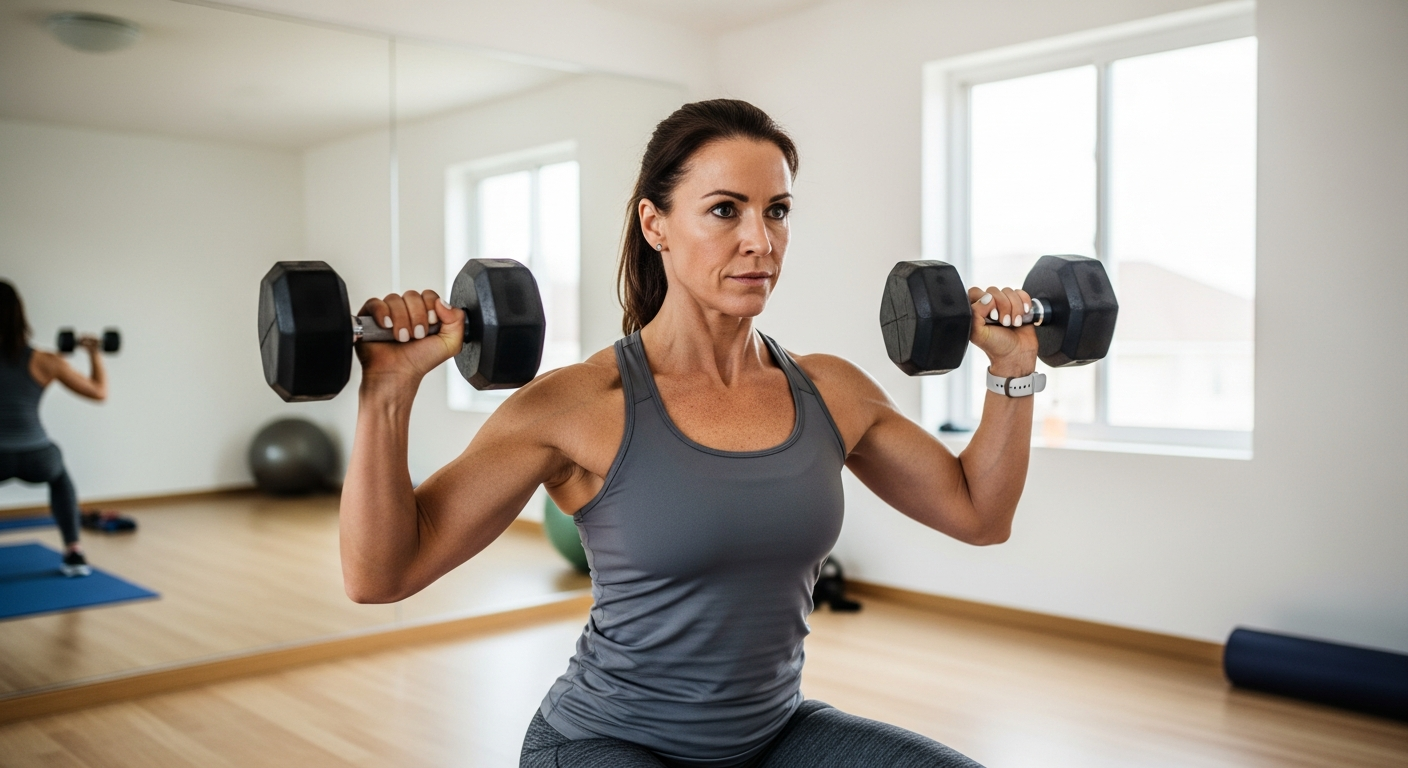

After 40, you lose approximately 3 to 8% of muscle mass per decade (sarcopenia), bone density begins declining (accelerating during perimenopause), and your metabolic rate drops. Exercise isn’t about looking a certain way – it’s about preserving the physical capacity that determines your quality of life for the next 40 years.
Strength Training: The Non-Negotiable
Resistance training 2 to 3 times per week is the single most important exercise habit for women over 40. It preserves and builds muscle, stimulates bone density, improves insulin sensitivity, supports hormonal balance, and reduces injury risk. Prioritize compound movements (squats, deadlifts, presses, rows) that work multiple muscle groups simultaneously. Progressive overload – gradually increasing weight or reps – is what drives adaptation.
Zone 2 Cardio: The Metabolic Foundation
Zone 2 cardio (conversational pace – you can talk but prefer not to) builds mitochondrial density and metabolic efficiency. Walking, cycling, swimming, or easy jogging for 30 to 45 minutes, 3 to 4 times per week. This isn’t about calorie burning – it’s about building the aerobic base that supports everything else, including cortisol recovery and cardiovascular health.
Flexibility and Balance
Yoga, Pilates, or dedicated mobility work 1 to 2 times per week preserves range of motion, supports joint health, and reduces fall risk. Balance training becomes increasingly important after 40 as proprioception naturally declines.
What to Avoid
Chronic high-intensity training without adequate recovery. Excessive cardio at the expense of strength training. Ignoring joint pain. Comparing your current capacity to your 25-year-old self. If you’re syncing exercise to your cycle, adjust intensity based on your phase rather than pushing through hormonal signals to rest.
Frequently Asked Questions
Is it too late to start strength training at 40?
No. Research shows that women who begin strength training after 40 still gain significant muscle mass and bone density. Your body responds to stimulus at any age. Start with bodyweight exercises or light weights and progress gradually.