

Psoriasis is a chronic autoimmune condition, not a skin infection or an allergy, and no home remedy cures it.
What you can do at home is calm flare-ups, protect your skin barrier, and reduce how often plaques come back, alongside whatever treatment your dermatologist has you on.
Some women pair skin-condition management with broader detox habits; here’s the evidence behind cleaning your body naturally and flushing out toxins.
This guide walks through what actually helps, what to avoid, and the specific signs that mean it’s time to call a doctor instead of reaching for another lotion.
You’ve probably already tried a few things from a well-meaning friend or a forum thread. Some of that advice works. A lot of it wastes time you don’t have during a flare.
I’ve spent years covering skin conditions for this site and talking to readers who manage psoriasis daily, and the pattern is consistent.
The women who do best combine medical treatment with a short list of home habits, done consistently, rather than chasing a new “cure” every few months.
What Psoriasis Actually Is (and Why Home Remedies Can’t Cure It)
Psoriasis happens when your immune system speeds up skin cell production, pushing new cells to the surface in days instead of weeks. That buildup creates the thick, scaly, often itchy plaques most people associate with the condition.
According to the National Psoriasis Foundation, more than 8 million Americans live with psoriasis, and it tends to cycle through flares and remission rather than following a straight line.
Because it’s autoimmune, psoriasis isn’t something you scrub away, starve away, or detox out of your system. Home remedies work on the symptoms: dryness, itching, scaling, and irritation. They don’t touch the underlying immune signaling that causes the disease.
That’s an important distinction, because it changes what “success” looks like. Fewer flares and calmer skin is a realistic goal. A permanent cure from oatmeal baths is not.
Moisturizing and Occlusion: The Single Most Useful Home Habit
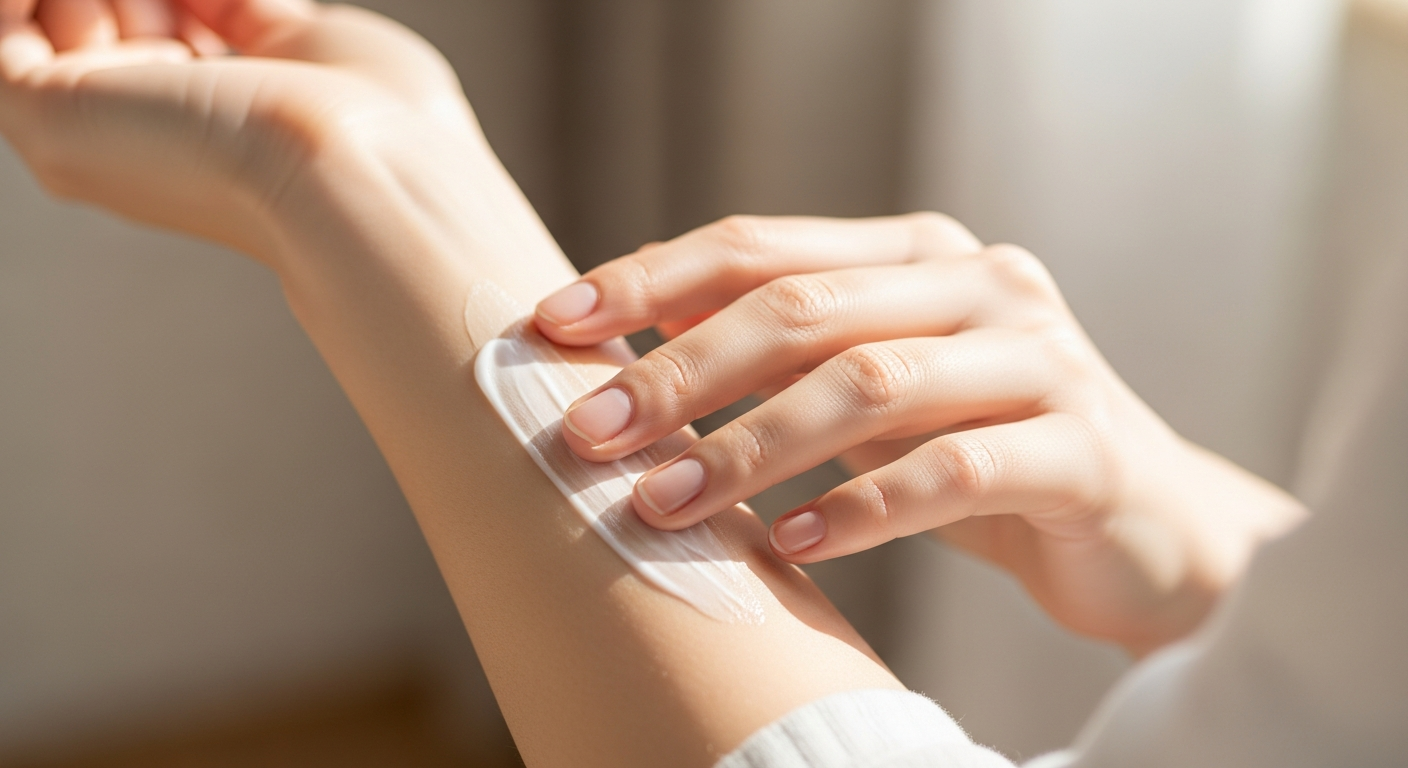
Thick, fragrance-free moisturizer applied right after bathing, while skin is still damp, is the closest thing to a universal recommendation dermatologists give psoriasis patients. Look for ointments and creams with ingredients like petrolatum, ceramides, or shea butter rather than thin lotions that evaporate fast.
Occlusion takes this a step further. After applying a thick moisturizer or a prescribed topical, covering the area overnight with a damp cloth or plastic wrap can improve absorption and reduce scaling by morning.
This technique is old, low-cost, and still recommended by the American Academy of Dermatology for stubborn plaques on elbows, knees, and feet.
Reapply moisturizer at least twice a day during a flare, more often if your hands are in and out of water. Dry skin cracks, and cracked skin around a plaque increases infection risk.
Bathing Techniques That Calm Itching Without Stripping Skin
Long, hot showers feel good in the moment and make psoriasis worse within hours. Heat strips natural oils and can trigger the itch-scratch cycle that spreads plaques through skin trauma, a phenomenon dermatologists call the Koebner response.
Switch to lukewarm water and cap showers or baths at 10 to 15 minutes. Colloidal oatmeal, ground fine enough to dissolve in water, has documented anti-inflammatory and skin-soothing properties.
It’s one of the few home ingredients with actual clinical backing for itch relief.
Dead Sea salt baths are another option many patients rely on, partly because of the mineral content and partly because the buoyancy and warmth relax tense, inflamed skin.
Some psoriasis patients travel specifically to bathe in the Dead Sea itself, combining the salt water with sun exposure under medical supervision.
At home, a cup or two of Dead Sea salt in a lukewarm bath, soaked for 15 minutes, is a reasonable substitute. Pat skin dry afterward instead of rubbing, then moisturize immediately.
Identifying and Managing Your Personal Triggers
Psoriasis flares rarely appear out of nowhere. Most patients can name at least one or two triggers once they start paying attention, and keeping a simple log for a few weeks often reveals patterns you’d otherwise miss.
Common triggers include:
- Stress, which raises inflammatory markers and is one of the most frequently reported flare triggers among psoriasis patients
- Smoking, linked in multiple studies to both higher psoriasis risk and more severe disease
- Alcohol, particularly in higher quantities, which can interfere with some systemic treatments and worsen flares
- Cold, dry weather, which reduces ambient humidity and dries out already compromised skin
- Skin injury, including cuts, sunburn, tattoos, and even aggressive scratching, which can trigger new plaques at the injury site through the Koebner phenomenon
You don’t need to eliminate every stressor overnight. Start with the one that’s easiest to change, whether that’s swapping a nightly glass of wine for sparkling water or adding a humidifier to your bedroom during winter.
Small, sustained changes beat dramatic ones you abandon after two weeks.
Over-the-Counter Options Worth Keeping in Your Medicine Cabinet
Salicylic acid preparations help soften and lift scale, making plaques thinner and less visible, and they’re widely available in over-the-counter shampoos and creams for scalp and body psoriasis.
Coal tar products, sold as shampoos, creams, and bath additives, have been used for psoriasis for decades and can reduce scaling, itching, and inflammation, though the smell and staining potential put some people off.
Both ingredients work best as adjuncts to a prescribed regimen, not replacements for it. Check with your dermatologist before combining coal tar or salicylic acid with prescription topicals, since layering products can sometimes reduce absorption of the medicated one.
Plain petroleum jelly deserves a mention here too. It’s inexpensive, fragrance-free, and effective as a barrier moisturizer, especially for cracked skin on hands, feet, and elbows where flare-ups tend to concentrate.
Sunlight and Phototherapy: Helpful, But With Real Limits
Controlled UV exposure can improve psoriasis for many patients, which is why dermatologists sometimes prescribe medical phototherapy using specific UVB wavelengths under supervision.
Short, moderate sun exposure, a few minutes at a time, a few times a week, can offer a similar effect for some people.
The line between helpful and harmful is thin. Sunburn is itself a skin injury and can trigger new plaques through the Koebner response, undoing whatever benefit the sun exposure provided.
If you want to try sunlight as part of your routine, start with brief sessions, use sunscreen on unaffected skin, and stop the moment you notice redness.
Medical phototherapy, delivered in a dermatologist’s office or through a prescribed home unit, gives you a controlled dose without the burn risk. It’s a legitimate treatment path worth discussing rather than a “natural alternative” to avoid doctors.
Diet, Weight, and Anti-Inflammatory Eating Patterns
Diet won’t cure psoriasis, and you should be skeptical of anyone claiming otherwise. The evidence here is real but modest, and it’s worth being honest about that instead of overselling it.
Maintaining a healthy weight matters more than any specific food. Excess weight is associated with more severe psoriasis and a reduced response to some treatments, and the National Psoriasis Foundation notes that weight loss can improve outcomes for patients who are overweight.
Anti-inflammatory eating patterns, similar to a Mediterranean-style diet rich in vegetables, fish, and olive oil, and lower in processed food and added sugar, are associated with milder symptoms in some studies. The research is still developing and individual results vary widely.
Some patients report improvement after cutting gluten, but this effect appears concentrated in the smaller group of psoriasis patients who also have celiac disease or gluten sensitivity, not the general psoriasis population.
Talk to your doctor before eliminating entire food groups, and don’t expect dietary changes to replace medical treatment.
What Not to Do: Habits That Make Psoriasis Worse
Harsh scrubbing to remove scale feels productive but injures the skin underneath and can trigger new plaques at the site through the Koebner phenomenon. Picking at plaques does the same thing, and it raises infection risk considerably.
Skip unproven “detox” regimens, extreme fasting protocols, and any product promising to cure psoriasis permanently. If a remedy sounds too good to be true for an autoimmune condition, it is.
Also avoid switching or stopping prescribed medication based on internet advice. Biologics and other systemic treatments work over weeks to months, and stopping abruptly can trigger a rebound flare that’s worse than the original.
Special Areas: Scalp, Nails, and Joint Pain
Scalp psoriasis often gets mistaken for stubborn dandruff treatments that work on regular flaking, but the plaques tend to be thicker and can extend past the hairline onto the forehead or neck.
Medicated shampoos with salicylic acid or coal tar, left on for the time specified on the label before rinsing, are the standard home approach.
Nail psoriasis shows up as pitting, discoloration, or separation of the nail from the nail bed, and it’s a signal worth mentioning to your dermatologist since it sometimes predicts joint involvement.
That joint involvement, known as psoriatic arthritis, affects roughly 30 percent of people with psoriasis according to the National Psoriasis Foundation, and it can cause permanent joint damage if left untreated.
Persistent joint pain, stiffness, or swelling alongside psoriasis symptoms is not something to manage with home remedies. It needs a rheumatology or dermatology evaluation.
When to See a Dermatologist
Home care has a ceiling, and knowing where it is protects both your skin and your joints. Book an appointment if you notice any of the following:
- Plaques are spreading, covering more body surface area than before, or not responding to your usual routine
- Joint pain, stiffness, or swelling appears alongside skin symptoms, which can signal psoriatic arthritis
- Psoriasis is affecting your sleep, work, relationships, or mental health, since quality of life is a legitimate treatment criterion, not a secondary concern
- You notice signs of infection at a plaque site, including increasing warmth, pus, red streaking, or fever
Modern psoriasis treatment includes options far beyond over-the-counter creams, including prescription topical steroids, vitamin D analogues, oral systemic medications, and biologic injections that target specific immune pathways. These have changed outcomes dramatically for moderate to severe cases over the past two decades.
This article won’t tell you which one to use or how to dose it, because that decision belongs to you and a dermatologist who knows your full medical history.
What home remedies can do is support that treatment and make daily life more comfortable between appointments.
If your skin has been feeling tight and flaky beyond your usual psoriasis pattern, especially as the weather shifts, it’s worth reading about how to deal with flaky winter skin, since seasonal dryness can compound psoriasis symptoms.
If you’re building out a broader skincare routine around your condition, our guide on how to use retinol correctly covers which active ingredients to introduce carefully and which ones can irritate compromised skin.
And if diet is part of your management plan, the deeper breakdown in psoriasis and the best diet to reduce flare-ups goes further into specific foods and eating patterns than we cover here.
Frequently Asked Questions
Can psoriasis be cured with home remedies?
No. Psoriasis is a chronic autoimmune condition with no cure, home-based or otherwise. Home remedies like moisturizing, oatmeal baths, and trigger management can reduce symptoms and flare frequency, but they work alongside medical treatment, not instead of it.
What is the fastest way to relieve a psoriasis flare at home?
Apply a thick, fragrance-free moisturizer immediately after a lukewarm bath or shower while skin is still damp, then avoid scratching or picking at plaques.
Salicylic acid products can help soften scale within a few days, though full flare resolution usually takes longer and may require your prescribed treatment.
Are oatmeal baths actually effective for psoriasis?
Colloidal oatmeal has documented anti-inflammatory and itch-relieving properties, making it one of the few home remedies with real evidence behind it. A 15-minute lukewarm bath with colloidal oatmeal, followed by immediate moisturizing, is a reasonable part of a symptom-management routine.
Does diet really affect psoriasis symptoms?
Diet has a modest but real effect for some patients.
Maintaining a healthy weight and following an anti-inflammatory eating pattern similar to a Mediterranean diet is associated with milder symptoms in some studies, though it will not replace medical treatment and results vary from person to person.
Can stress really trigger a psoriasis flare?
Yes. Stress is one of the most commonly reported triggers among psoriasis patients, and it raises inflammatory activity in the body. Managing stress through consistent sleep, exercise, or therapy won’t eliminate psoriasis, but it can reduce how often flares occur.
When should I stop trying home remedies and see a doctor?
See a dermatologist if plaques are spreading or worsening despite consistent home care, or if you develop joint pain or stiffness.
Also see one if psoriasis is affecting your daily life or mental health, or if you notice signs of infection like pus, warmth, or fever at a plaque site.
Is sun exposure good or bad for psoriasis?
Brief, controlled sun exposure can improve psoriasis for some people, which is the basis for medical phototherapy. Sunburn, however, is a skin injury that can trigger new plaques, so any sun exposure should be short, monitored, and stopped at the first sign of redness.
Does psoriasis increase the risk of other health problems?
Yes. Roughly 30 percent of people with psoriasis develop psoriatic arthritis, according to the National Psoriasis Foundation, and psoriasis is also associated with higher rates of cardiovascular disease. This is part of why ongoing dermatology care matters even when skin symptoms feel manageable.