
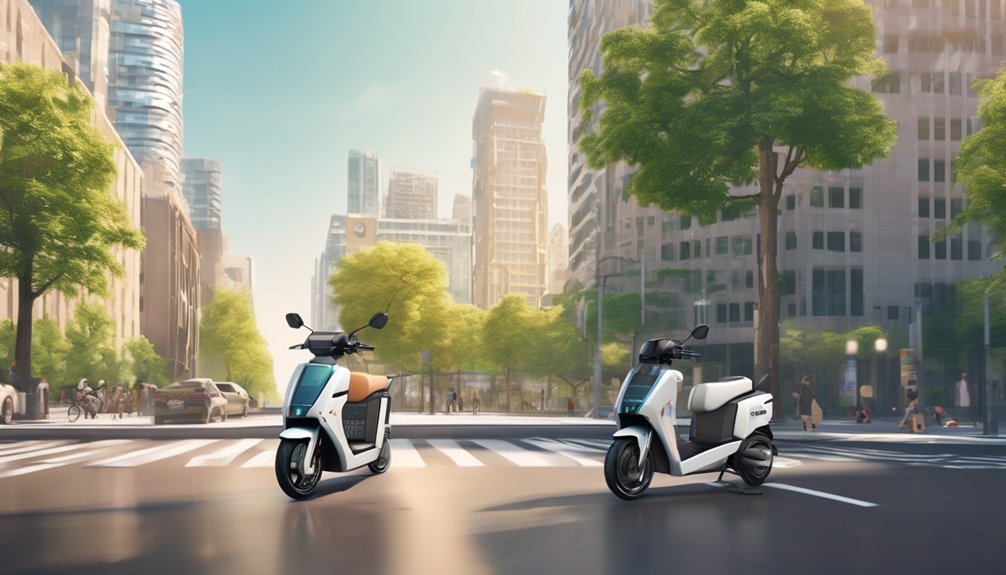

You’ll find cities replacing cars with electric mopeds because they offer faster, more efficient travel in crowded urban areas. These mopeds reduce pollution by cutting carbon emissions and noise, improving air quality and overall health. They also lower costs for fuel and maintenance, easing economic burdens for commuters and city budgets. While infrastructure and safety challenges exist, cities address them with new lanes and charging options. Understanding these shifts reveals how urban mobility is evolving today.
Benefits of Electric Mopeds in Urban Environments
Because urban areas often face heavy traffic congestion and limited parking options, electric mopeds offer practical advantages that can improve daily commuting.
You’ll find they navigate crowded streets more easily than cars, saving time and reducing stress. Safety regulations guarantee these vehicles meet standards that protect you while riding, enhancing your confidence on busy roads.
The user experience is streamlined, with simple controls and quiet operation, allowing you to focus on the journey rather than the vehicle.
Choosing an electric moped gives you efficient mobility, combining convenience with compliance, making urban travel a more manageable and flexible option.
Environmental Impact of Shifting From Cars to Mopeds
When you replace a car with an electric moped, you greatly reduce your carbon footprint.
Electric mopeds emit no tailpipe pollutants, cutting down urban air pollution considerably. Their smaller size and lighter weight mean less energy is needed for travel, making them a key element of sustainable transportation.
By choosing electric mopeds, you contribute to lowering greenhouse gas emissions, helping cities meet environmental goals. This shift supports cleaner air and quieter streets, enhancing urban life quality.
Embracing electric mopeds aligns your daily commute with eco-friendly values while maintaining the freedom to move efficiently through city spaces.
Economic Advantages for Commuters and Cities
Although the initial investment in an electric moped may seem significant, the overall cost savings for commuters quickly become apparent through lower fuel expenses and reduced maintenance requirements.
You’ll also appreciate the commuter convenience—electric mopeds offer easier parking and less traffic congestion, saving time and stress.
Cities benefit economically as well, reducing infrastructure strain and lowering pollution-related health costs. Public transit systems can integrate mopeds to enhance mobility options, supporting local economies.
These advantages combine to create a financially viable, efficient alternative to cars, aligning with your desire for freedom while promoting urban economic sustainability.
Challenges and Solutions in Integrating Electric Mopeds
Integrating electric mopeds into urban transportation systems presents several challenges that cities and commuters must address.
You’ll notice infrastructure improvements are essential, such as adding dedicated lanes and charging stations. Safety regulations must also evolve to protect riders and pedestrians effectively.
To help you understand, consider these key points:
- Expanding and upgrading infrastructure to support electric mopeds
- Implementing clear safety regulations and rider training programs
- Ensuring proper maintenance and parking options to prevent clutter
Future Trends in Urban Mobility and Transportation Policies
As cities work to overcome the challenges of integrating electric mopeds, they also need to contemplate how broader trends in urban mobility will shape future transportation policies.
Smart city initiatives will play a key role by using data to optimize traffic flow and improve safety.
Urban design will prioritize multi-modal transportation, creating spaces that support electric mopeds alongside bikes and pedestrians.
Policies will encourage sustainable, flexible options that reduce car dependence, offering you more freedom to move efficiently.
Frequently Asked Questions
How Do Electric Mopeds Compare to Bicycles in Urban Settings?
You’ll find electric mopeds offer moped advantages like faster speeds and less effort, boosting urban mobility. They give you more freedom than bicycles, letting you zip through traffic and travel longer distances with ease.
What Safety Gear Is Recommended for Electric Moped Riders?
You should wear a full-face or modular helmet for maximum protection and choose lightweight, breathable protective clothing that shields you without restricting your freedom. Gloves and sturdy shoes also help keep you safe on your ride.
Are There Specific Licensing Requirements for Electric Mopeds?
Yes, you’ll need to follow specific licensing regulations depending on your city or state. Many places require rider education to guarantee your safety and freedom on the road, so be sure to check local rules before riding.
How Do Electric Mopeds Perform in Extreme Weather Conditions?
You’ll find electric mopeds handle rain well, offering good traction and control. In snow, performance drops, so you’ll want extra caution or winter tires to keep your freedom safe and smooth on slippery roads.
Can Electric Mopeds Be Used for Long-Distance Travel Outside Cities?
You can use electric mopeds for long-distance travel, but their battery range limits how far you’ll go without recharging. If you’re craving freedom, plan your route carefully to maximize their long distance capabilities and enjoy the ride.