
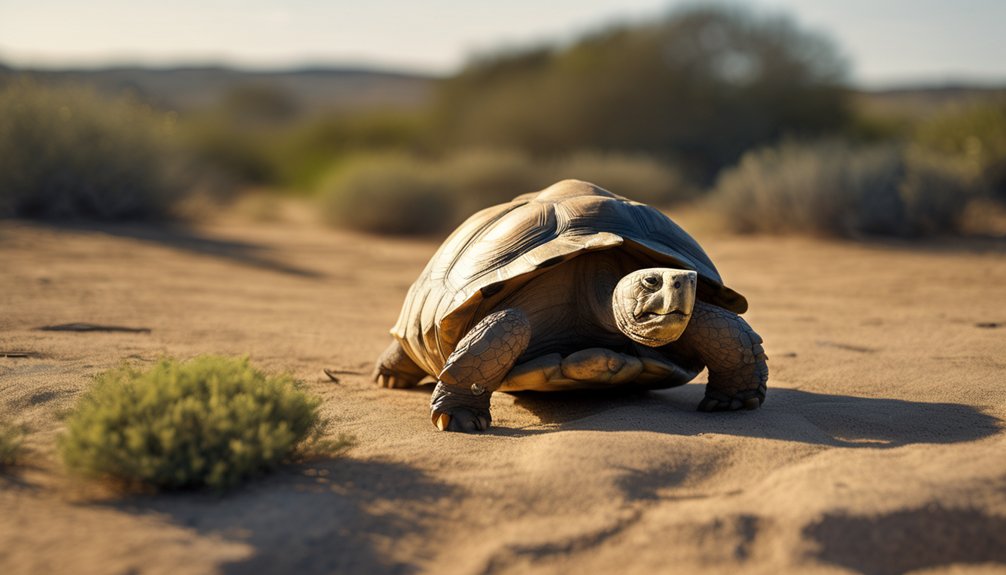

You’ll find some of the oldest animals, like the Greenland shark, live over 400 years due to slow growth and cold Arctic waters. The Aldabra giant tortoise can reach 200 years, benefiting from a slow metabolism. Deep-sea clams also enjoy long lives by thriving in stable, cold habitats. The immortal jellyfish stands out by reversing its aging process entirely. These examples reveal unique strategies for longevity that challenge what you might expect about lifespan. More fascinating details await your exploration.
The Remarkable Longevity of the Greenland Shark
The Greenland shark stands out as one of the longest-living vertebrates on Earth, with individual lifespans estimated to exceed 400 years.
When you explore longevity research, you’ll find this species fascinating because its slow growth and cold Arctic habitat contribute to its extended life.
Scientists use radiocarbon dating of eye lens proteins to estimate the shark’s age accurately.
Understanding the Greenland shark’s longevity offers insights into aging processes in vertebrates.
Ancient Giants: The Aldabra Giant Tortoise
Aldabra giant tortoises rank among the longest-living land animals, with some individuals reaching ages over 200 years. You’ll find these ancient giants primarily in tortoise habitats like the Aldabra Atoll, where they roam freely.
Their tortoise diet consists mainly of grasses, leaves, and fruits, supporting their slow metabolism and longevity. Consider these facts:
- They can weigh up to 250 kilograms.
- Their slow growth contributes to their lifespan.
- They thrive in isolated island ecosystems.
- Their shells protect them from predators.
Understanding their lifestyle offers insight into how these tortoises achieve remarkable longevity in natural settings.
The Immortal Jellyfish: A Unique Case of Biological Rejuvenation
Although most animals follow a typical life cycle that ends with aging and death, the immortal jellyfish defies this pattern through a remarkable process of biological rejuvenation.
When faced with injury or environmental stress, it can revert its cells to an earlier stage, fundamentally restarting its life cycle. This ability, known as jellyfish regeneration, grants it a form of biological immortality rarely seen in nature.
While it’s not truly eternal, this unique capability allows it to avoid the usual aging process. Understanding this process offers valuable insights into cellular regeneration and longevity.
Long-Lived Deep-Sea Clams and Their Secrets to Survival
When you explore the depths of the ocean, you’ll find deep-sea clams that live far longer than most other animals.
These clams thrive in extreme clam habitats, adapting remarkably to ocean depths. Their longevity stems from several factors:
- Slow metabolism reduces cellular damage over time.
- Stable, cold environments limit stress and aging processes.
- Low predation rates support extended lifespans.
- Efficient energy use sustains essential functions in nutrient-poor zones.
Understanding these adaptations reveals how deep-sea clams maintain life for centuries, offering insights into survival strategies in harsh ocean depths and unique clam habitats.
Frequently Asked Questions
How Do Scientists Verify the Ages of These Ancient Animals?
You use radiocarbon dating and count growth rings to verify ancient animals’ ages. These methods let you reveal nature’s secrets without constraints, giving you freedom to explore timelines that stretch beyond ordinary limits.
What Factors Contribute to an Animal’s Extreme Longevity?
You’ll find that genetic factors and environmental influences play huge roles in extreme longevity. When your genes promote resilience and your environment stays stable, you’re free to live far beyond typical lifespans, thriving without limits.
Are There Any Endangered Species Among the Oldest Animals?
Yes, you’ll find endangered species among the oldest animals, often thriving in ancient habitats. Protecting these creatures means preserving their freedom and the timeless environments they depend on, ensuring their survival against modern threats.
How Does Climate Change Impact These Long-Lived Animals?
You’ll see climate change challenges long-lived animals by causing habitat loss and testing their climate resilience. But don’t lose hope—protecting their freedom means supporting efforts that strengthen their ability to adapt and survive.
Can Studying These Animals Help Improve Human Health and Lifespan?
Yes, studying these animals can boost your telomere research and regenerative medicine efforts, helping you reveal secrets to longer, healthier lives—granting you the freedom to live vibrantly and extend your healthspan naturally.