
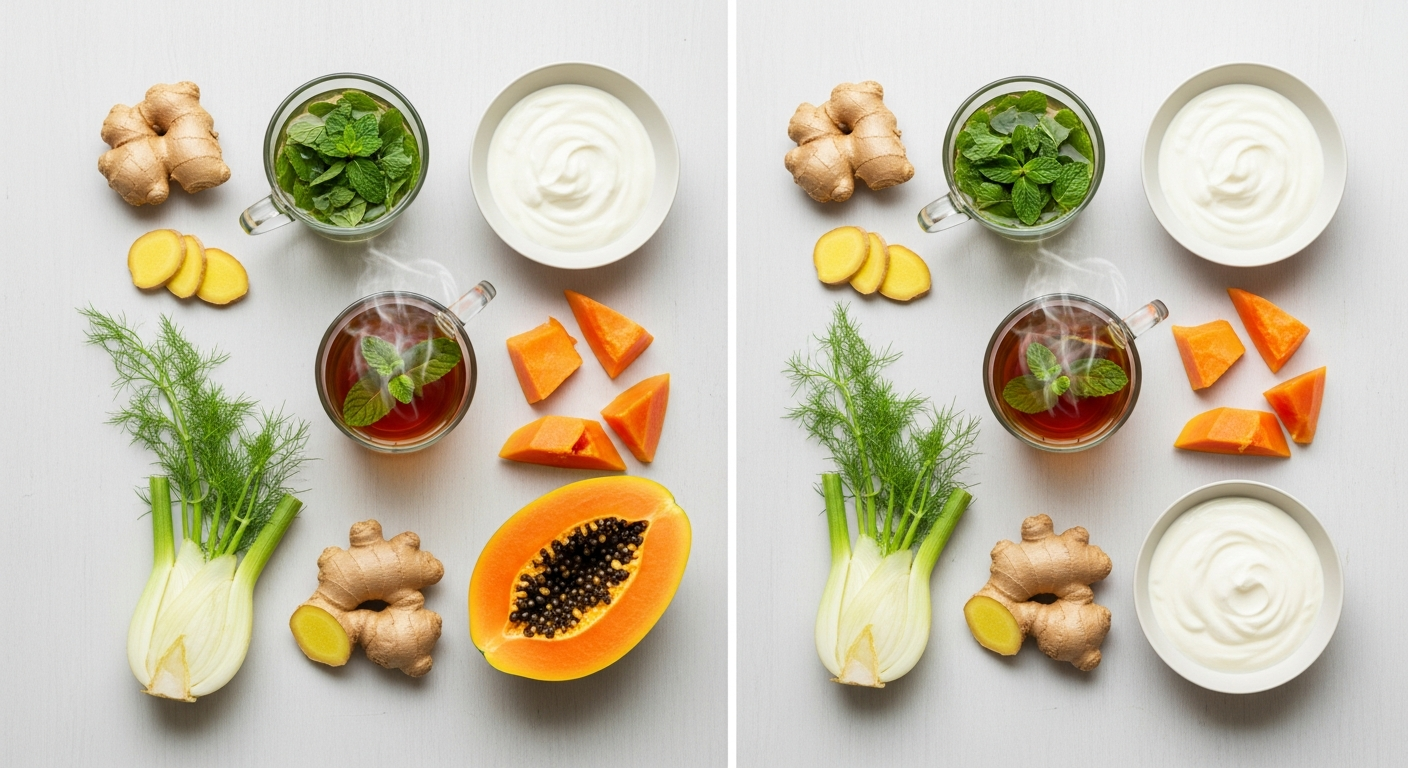

Women experience bloating more frequently and more severely than men, and it’s not a coincidence. Estrogen and progesterone directly influence gut motility, water retention, and microbiome composition. If your bloating predictably worsens before your period, during ovulation, or since entering perimenopause, hormones are almost certainly involved.
The Hormone-Bloating Connection
Progesterone slows gut motility. In the luteal phase after ovulation, rising progesterone means food moves through your digestive tract more slowly, producing more gas through bacterial fermentation. Estrogen fluctuations affect water retention and gut barrier integrity. This is why bloating follows a cyclical pattern that mirrors your menstrual cycle.
Bloating and reflux frequently show up together; here’s how to manage acid reflux if that’s part of your pattern too.
For a quicker, more general troubleshooting approach when you need relief today rather than a cycle-tracking strategy, this guide on how to stop bloating fast covers the fastest wins.
11 Remedies That Address Root Causes
1. Peppermint tea. Peppermint relaxes the smooth muscles of the GI tract, reducing gas and cramping. Drink it between meals rather than during.
2. Ginger. Fresh ginger stimulates digestive enzymes and gut motility. Grate 1 inch of fresh ginger into hot water 20 minutes before meals.
3. Digestive enzymes. A broad-spectrum digestive enzyme taken with meals can help if your body isn’t producing enough on its own. Look for formulas containing lipase, protease, amylase, and lactase.
4. Abdominal massage. Massage your abdomen clockwise (following the path of your colon) for 5 minutes. This physically moves gas through your digestive tract and stimulates your vagus nerve.
5. Reduce high-FODMAP foods temporarily. Onions, garlic, wheat, apples, and certain legumes ferment in the gut and produce gas. A short-term reduction (not permanent elimination) can provide relief while you address underlying causes.
6. Increase fiber gradually. Fiber helps long-term, but adding too much too fast worsens bloating. Increase by 5 grams per week until you reach 25 to 30 grams daily.
7. Movement after meals. A 10 to 15 minute walk after eating accelerates gastric emptying and reduces post-meal bloating more effectively than any supplement.
8. Magnesium citrate. Magnesium draws water into the intestines and supports motility. 200 to 400mg before bed addresses both bloating and the sleep disruptions that often accompany hormonal bloating.
9. Fermented foods. Kefir, sauerkraut, and kimchi introduce beneficial bacteria that improve gut diversity and reduce gas over time.
10. Stress reduction. Stress directly slows digestion through sympathetic nervous system activation. Chronic stress bloating won’t resolve with dietary changes alone.
11. Apple cider vinegar. 1 tablespoon diluted in water before meals may support stomach acid production in women with low stomach acid. This isn’t universally helpful but works for a specific subset of bloating causes.
Frequently Asked Questions
When is bloating a sign of something serious?
See your doctor if bloating is persistent (lasting more than 2 weeks without cyclical patterns), accompanied by unexplained weight loss, blood in stool, or severe pain. New-onset bloating after age 40 that doesn’t follow a cyclical pattern warrants investigation.
Does bloating cause weight gain?
Bloating causes temporary water retention that can show up as 2 to 5 pounds of fluctuation on the scale. This isn’t fat gain. It resolves as your hormones shift, typically within days of your period starting.