
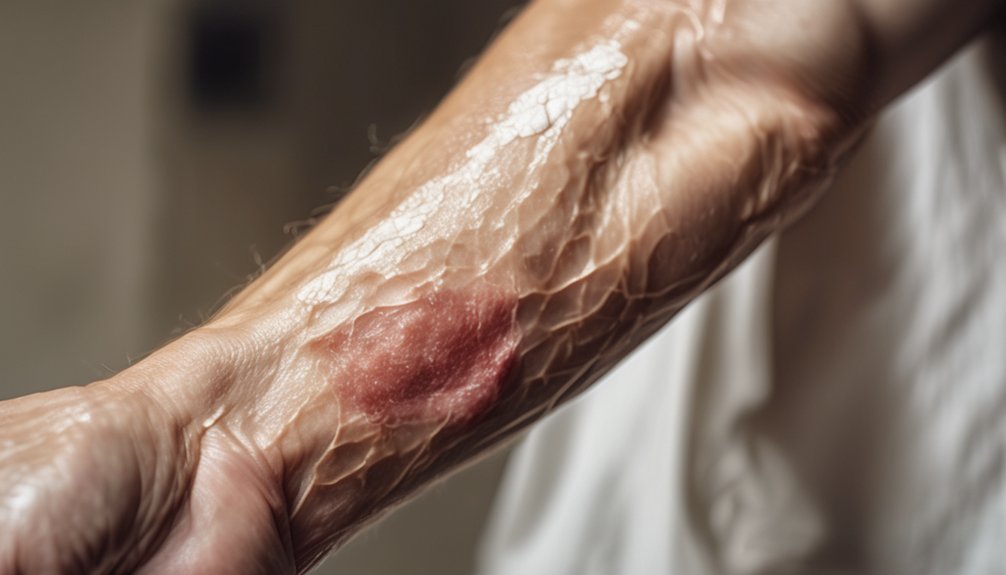

To treat dry skin patches effectively, focus on repairing your skin barrier using moisturizers with humectants like glycerin and occlusives such as petrolatum. These ingredients work together to attract and lock in moisture. Also, adopt habits that support skin hydration, like avoiding harsh soaps, limiting hot showers, and maintaining a balanced diet rich in omega-3s and vitamins. If dryness persists or worsens, consulting a dermatologist may be necessary. Further details can help you manage and understand this condition better.
Understanding the Causes of Dry Skin Patches
Although dry skin patches can appear for various reasons, understanding their underlying causes is essential for effective treatment.
You need to recognize that damage to your skin barrier often leads to dryness. This barrier protects you from moisture loss and harmful irritants.
When environmental factors such as cold weather, low humidity, or harsh winds affect your skin, they weaken this barrier. As a result, your skin struggles to retain hydration, causing those stubborn dry patches.
Identifying these causes helps you address the problem accurately, ensuring you can restore your skin’s health and maintain its natural protection efficiently.
Effective Moisturizing Ingredients to Look For
When you choose a moisturizer for dry skin patches, it’s important to focus on ingredients that effectively restore hydration and support the skin barrier.
Look for humectant properties in ingredients like glycerin and hyaluronic acid; these attract water to your skin, increasing moisture levels.
Additionally, occlusive agents such as petrolatum, dimethicone, or beeswax create a protective layer, preventing water loss throughout the day.
Combining humectants and occlusive agents guarantees your skin stays hydrated and protected.
Selecting products with these components can help you manage dry patches efficiently, maintaining your skin’s natural balance without unnecessary irritation or dryness.
Lifestyle Changes to Support Skin Hydration
Since your daily habits directly affect your skin’s moisture levels, making targeted lifestyle changes can greatly improve hydration.
Start by establishing consistent hydration habits, such as drinking enough water throughout the day to maintain internal moisture balance. Incorporate dietary adjustments by including foods rich in omega-3 fatty acids, vitamins C and E, and antioxidants, which support skin health and repair.
Avoid excessive alcohol and caffeine, as they can dehydrate your skin. Additionally, limit long hot showers that strip natural oils.
These practical steps foster a skin-friendly environment, enhancing hydration and reducing dry patches effectively over time.
When to Seek Professional Dermatological Treatment
Improving your daily habits can greatly reduce dry skin patches, but some cases may require professional evaluation.
You should seek dermatological treatment if your dry skin persists despite over-the-counter remedies or worsens over time. Certain skin conditions, like eczema or psoriasis home remedies, need specific diagnosis and tailored treatment options that only a dermatologist can provide.
Additionally, if you experience intense itching, redness, or signs of infection, professional assessment is essential. A dermatologist can accurately identify underlying issues and recommend effective therapies, ensuring you regain healthy skin without unnecessary trial and error, allowing you to maintain your freedom from discomfort.
Common Myths About Dry Skin Treatments Debunked
Although dry skin treatments are widely available, many misconceptions can lead you to ineffective or even harmful choices.
You might believe that applying more moisturizer always helps, but moisturizer misconceptions like overuse can clog pores and worsen dryness.
Hydration myths also suggest drinking excessive water directly improves skin moisture, yet topical care is essential alongside hydration.
Some think harsh soaps clear dry patches, but they often strip natural oils, increasing dryness.
Understanding these facts helps you select appropriate treatments, avoiding common pitfalls.
Frequently Asked Questions
Can Diet Affect the Severity of Dry Skin Patches?
Yes, your diet can impact dry skin patches. Including omega fatty acids boosts skin health, while staying hydrated improves hydration levels. You’ll feel freer and more comfortable with these simple nutritional changes.
Are Dry Skin Patches Contagious?
No, dry skin patches aren’t contagious. Most skin conditions causing dryness come from your body’s reactions or environment, so you don’t have to worry about spreading them. You can freely manage your skin without fear of infecting others.
How Do Weather Changes Impact Dry Skin Patches?
You’ll notice dry skin patches worsen as humidity levels drop during seasonal variations. Cold, dry air strips your skin’s moisture, so adjusting your skincare routine lets you keep your freedom to move comfortably through changing weather.
Can Stress Worsen Dry Skin Patches?
Yes, stress can worsen dry skin patches by disrupting your skin’s barrier. You should focus on stress management and boost skin hydration to keep your skin free, healthy, and glowing despite life’s pressures.
Are There Specific Fabrics to Avoid With Dry Skin Patches?
You should avoid rough fabric types like wool and synthetic blends since they can irritate your skin sensitivity. Instead, choose soft, breathable fabrics like cotton or bamboo to keep your skin comfortable and free from unnecessary irritation.