
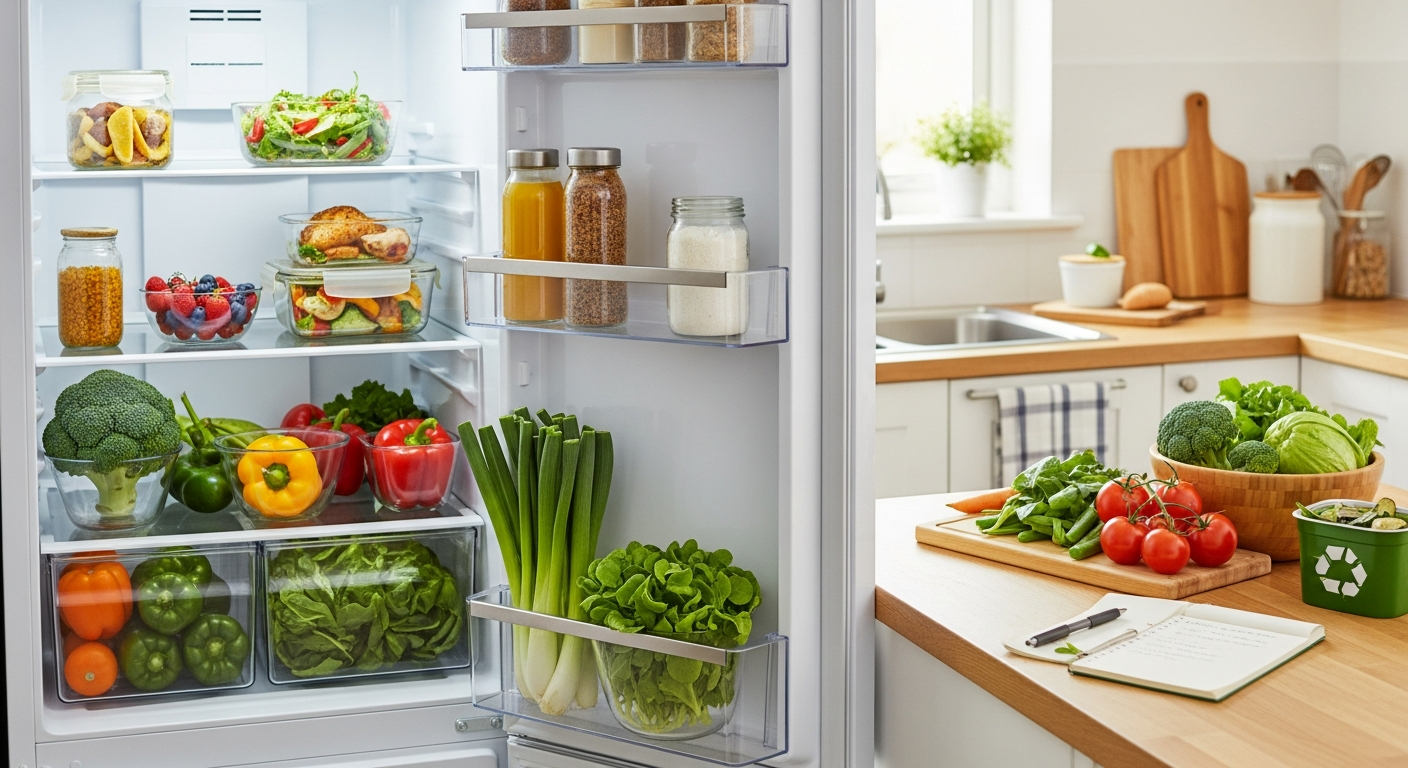

Reducing food waste starts with knowing where it actually happens in your kitchen, not with vague promises to “waste less.”
The average American household throws out roughly $1,500 worth of food every year, according to USDA estimates. Most of that loss traces back to three habits: over-buying, poor storage, and confusion over date labels.
Big holiday meals are one of the worst offenders for food waste; here’s how to plan for thanksgiving on a tight budget without over-buying.
You do not need a zero-waste lifestyle to fix this. You need a handful of systems that run on autopilot once you set them up.
This guide walks through exactly where families lose food, what to change first, and how to build habits that stick past week one.
Why Food Waste Costs Your Family More Than You Think
Food waste is expensive because you are paying twice: once at checkout, once again when it hits the trash.
The USDA estimates that 30 to 40 percent of the US food supply goes uneaten. For a family of four, that can mean $150 or more vanishing from the grocery budget every month.
The environmental cost is just as real. The EPA reports that food waste is the single largest category of material sent to US landfills, where it breaks down and releases methane, a greenhouse gas more potent than carbon dioxide over a 20-year period.
None of this requires guilt. It requires a system. Families who track waste for even two weeks usually find the same three or four repeat offenders sitting in the trash, and those are the easiest fixes to make permanent.
Where Does Most Household Food Waste Actually Happen?
Most household food waste happens in four spots: over-buying at the store, produce spoiling before it gets used, plates that go half-eaten, and confusion over date labels leading to premature tossing. Each has a distinct fix.
Over-buying happens when you shop without a plan and grab extra “just in case.” Spoilage happens when food sits in the wrong part of the fridge or gets buried behind other items.
Plate waste is a portioning problem, especially with kids. Date-label confusion is a labeling problem, not a safety problem, in most cases.
Once you can name which category is draining your kitchen, you can target it directly instead of trying to fix everything at once.
Over-Buying: The Silent Budget Killer
Over-buying is the single biggest driver of household food waste, according to a 2023 ReFED analysis of US food waste sources. Bulk deals and “stock up” sales often backfire when the food spoils before your family gets to it.
A simple test: before you buy in bulk, ask if you can realistically use the item within its shelf life. If the answer is no, the discount is not a discount. It is delayed waste.
Spoilage: What Actually Extends Shelf Life
Spoilage is largely a storage problem. Berries last nearly twice as long when stored unwashed and only rinsed right before eating, since surface moisture accelerates mold growth.
I started doing this three years ago after losing an entire container of strawberries to mold within two days. It dropped my produce waste noticeably within the first week.
Leafy greens stay crisp longer wrapped loosely in a slightly damp paper towel inside a container, rather than left in their original plastic bag.
Herbs like cilantro and parsley last over a week when trimmed and stood upright in a glass of water, then loosely covered with a plastic bag in the fridge, similar to a bouquet of flowers.
Plate Waste: The Kid Factor
Plate waste spikes in households with young kids because portions are guessed rather than measured. Serving smaller first portions and offering seconds cuts plate waste significantly, since kids can always ask for more but rarely finish an oversized plate they did not choose.
Leftover proteins and vegetables from dinner make far better lunches the next day when kids already like the dish. A quesadilla made from last night’s chicken gets eaten. A container of plain reheated chicken breast often does not.
Best By vs Use By: What the Dates Actually Mean
“Best by” and “use by” are quality indicators from the manufacturer, not federal safety deadlines, according to the USDA.
“Best by” tells you when flavor or texture may start to decline. “Use by” is the manufacturer’s estimate of peak quality, again not a hard safety cutoff for most shelf-stable and refrigerated foods.
The USDA notes that, except for infant formula, product dates are not required by federal law and are not a guarantee of food safety. Your senses (smell, texture, appearance) are usually a better guide than the printed date for eggs, hard cheese, and canned goods.
This does not apply to everything. Deli meats, soft cheeses, and ready-to-eat foods carry higher listeria risk and should be treated more conservatively, per USDA FoodKeeper guidance.
When in doubt on a high-risk item, toss it. When in doubt on a shelf-stable pantry item, trust your nose first.
How to Build a Weekly System That Actually Cuts Waste
A weekly system beats willpower every time. The core loop is: plan meals against what you already own, shop from a list, store food correctly the moment it enters the house, and use older items first.
This is the exact sequence that took my own household from a weekly trash bag of spoiled produce to maybe one or two items lost per month, once it became routine after about a month of consistent practice.
Start With a 10-Minute Meal Plan
Before you shop, open the fridge and pantry and write down what needs to be used this week. Build two or three meals around those items first, then fill in the rest of the week around your family’s usual rotation.
This single step prevents the most common form of waste: buying duplicate ingredients for a recipe when you already had half of it sitting in the crisper drawer.
Shop With a List, and Check Your Fridge Photo
Take a quick phone photo of your fridge and pantry shelves before you leave for the store. It sounds small, but it stops the classic mistake of buying a second bag of spinach because you forgot the first one was still good.
Stick to the list for perishables especially. Non-perishable pantry staples have more room for flexibility since they will not spoil before next week’s trip.
Store Food by Type, Not by Habit
Most people organize the fridge by container shape instead of by food science, and it costs them.
Dairy belongs on a middle shelf, not the door, since the door experiences the most temperature swings every time it opens. Raw meat belongs on the bottom shelf to prevent drip contamination.
Fruits that release ethylene gas, like apples and bananas, ripen nearby produce faster when stored together. Keep them separate from ethylene-sensitive items like leafy greens, broccoli, and berries if you want those to last the full week, a practice documented in USDA FoodKeeper storage guidance.
Practice First In, First Out
Every time you put away groceries, move older items to the front of the shelf and newer items to the back. Restaurants call this FIFO, and it works just as well in a home fridge as it does in a commercial kitchen.
A $3 label maker or even masking tape and a marker to jot the purchase date on opened items removes the guesswork entirely. You are not relying on memory to know what has been sitting for ten days.
Freeze Before It’s Too Late
Bread, sliced deli meat, shredded cheese, and cooked grains all freeze well and thaw quickly for weeknight meals.
According to USDA FoodKeeper, most frozen foods stay safe indefinitely at 0°F, though quality drops over time. Aim to use most items within 3 to 6 months for best texture and flavor.
A standing rule in my kitchen: any produce heading toward the compost bin gets a five-second freezer check first.
Overripe bananas become smoothie base or banana bread. Wilting herbs go into oil in an ice cube tray. Vegetable ends and peels go into a labeled freezer bag for stock.
Use Scraps and Leftovers on Purpose
Keep one freezer bag labeled “stock scraps” for onion ends, carrot peels, celery tops, and herb stems. Once it fills up, simmer the contents with water for an hour for a free vegetable stock base.
Leftover roasted vegetables reheat well folded into eggs, grain bowls, or quesadillas the next day. Treat one night a week as an informal “clean out the fridge” night built around whatever needs to go, rather than a new recipe.
Composting Basics for Families Who Don’t Have a Yard
Composting is not just for people with backyards. Countertop compost bins, freezer storage for scraps until pickup day, and municipal food-scrap collection programs now exist in most major US cities, according to the EPA’s Sustainable Management of Food program.
If your city offers curbside composting, a small lined countertop bin makes the daily habit painless. If it does not, check whether a local farmers market or community garden accepts food scraps, since many do as part of composting drop-off programs.
For families without any local option, a simple worm bin (vermicomposting) fits in a closet or garage and processes fruit and vegetable scraps within weeks, turning them into usable soil for houseplants or a garden bed.
What to Change This Week
Pick two changes, not ten. Trying to overhaul everything on day one is why most waste-reduction attempts fail by week three.
Start with a fridge photo before your next grocery run and a labeled “eat this first” bin on one shelf for items nearing the end of their window. Add FIFO rotation once the first two habits feel automatic, usually after seven to ten days.
Track what actually lands in the trash for one week before you change anything. You cannot fix what you have not measured, and most families are surprised by which single item is responsible for the bulk of their loss.
For more on interpreting expiration language correctly so you stop tossing food that is still good, see this guide on expiration date labels and how to avoid food waste.
If produce spoilage is your main issue, pair that with tips on adding more vegetables to your diet without letting them go bad first.
Families with young kids often lose the most food to breakfast routines that never get finished. This piece on encouraging kids to choose a healthy breakfast pairs well with portion-control tips above.
And if raw produce prep is part of your waste problem, this guide on washing and prepping fruit and veggie snacks for kids covers the storage side in more depth.
Frequently Asked Questions
How much food does the average family waste per year?
US households waste an estimated $1,500 worth of food annually, according to USDA figures, largely from over-buying, spoilage, and plate waste. Tracking your own trash for one week usually reveals which category is responsible for most of that loss.
Is it safe to eat food after the “best by” date?
In most cases, yes. “Best by” is a manufacturer’s quality estimate, not a federal safety deadline, per USDA guidance. Use your senses, smell, texture, and appearance, as the real test, except for higher-risk items like deli meat or soft cheese.
What foods should never be frozen to save later?
High-water-content produce like lettuce, cucumbers, and whole tomatoes turn mushy after freezing and thawing, according to USDA FoodKeeper. Cooked grains, bread, shredded cheese, and most proteins freeze well and are worth saving instead of tossing.
How do I stop my kids from wasting food at meals?
Serve smaller first portions and let kids ask for seconds rather than guessing a full plate upfront. Turning last night’s dinner into a new format, like a quesadilla or fried rice, also gets more leftovers eaten than reheating the same plate.
Where should I store fruits and vegetables to make them last longer?
Keep ethylene-producing fruits like apples and bananas away from ethylene-sensitive vegetables like broccoli and leafy greens, since the gas speeds up spoilage in nearby produce. Store berries unwashed and wrap greens in a slightly damp paper towel inside a container.
Can I compost if I live in an apartment without a yard?
Yes. Many US cities now offer curbside food-scrap collection or drop-off points at farmers markets, per the EPA’s food waste programs. A small countertop bin or worm bin also works well for apartments without outdoor space.
Does meal planning actually reduce grocery spending?
Meal planning built around food you already own prevents duplicate purchases, one of the top causes of household food waste identified by ReFED’s 2023 analysis. Even a rough 10-minute plan before shopping tends to cut impulse and duplicate buys significantly.