
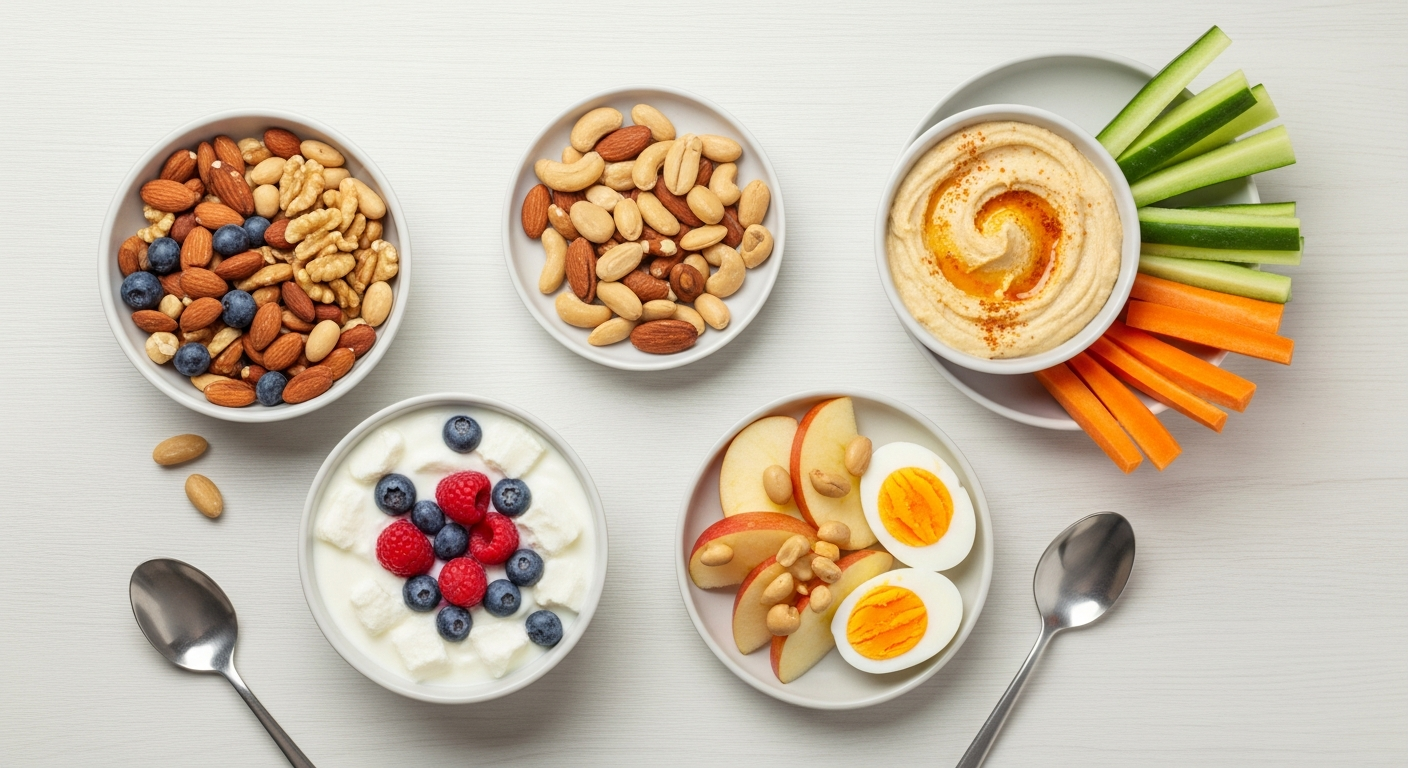

Healthy snacks for weight loss work because of what they contain, not because of when you eat them. A snack that pairs protein with fiber keeps you full for hours and stops the 3pm vending machine spiral before it starts. You don’t need to cut snacks out to lose weight. You need better ones, sized right, and timed around your actual hunger instead of the clock.
This guide breaks down exactly what makes a snack work for fat loss, gives you real food lists with rough calorie and protein counts, and tells you what to skip on the label. No 100-calorie packs of crackers pretending to be a solution.
What Actually Makes a Snack Support Weight Loss
Three things determine whether a snack helps or sabotages your goals: protein content, fiber content, and volume. Get two of the three right and you’re ahead of most snack advice on the internet.
Protein triggers satiety hormones like GLP-1 and PYY, which tell your brain you’re full. The Academy of Nutrition and Dietetics recommends spreading protein intake across the day rather than loading it all into dinner, because your body can only use so much at once for muscle repair and hunger control. A snack with at least 10 grams of protein does more for appetite control than a snack with triple the calories but no protein.
Fiber slows digestion and stabilizes blood sugar. When blood sugar spikes and crashes, that crash is what sends you hunting for something sweet an hour later. A snack built around vegetables, legumes, berries, or whole grains keeps glucose steadier, which means fewer cravings later in the day.
Volume matters more than people realize. Two cups of air-popped popcorn weighs almost nothing calorically but fills your stomach mechanically, which triggers stretch receptors that signal fullness independent of calorie count. This is why a small bag of chips feels less satisfying than a big bowl of cucumber and hummus, even at similar calories.
The Myth of “No Snacking” for Weight Loss
You do not need to stop snacking to lose weight. The 2020-2025 Dietary Guidelines for Americans, published by USDA and HHS, frame eating patterns around total daily intake and nutrient quality, not meal frequency. There’s no rule in the guidelines that says three meals beats three meals plus two snacks.
What actually causes weight gain from snacking is snacking on foods with low protein and fiber and high refined carbs, eaten in portions that aren’t tracked because “it’s just a snack.” A large bag of pretzels eaten in front of the TV can run 800+ calories without you noticing, because pretzels don’t fill you up the way protein and fiber do.
Cutting out snacks entirely tends to backfire for a specific reason: you get hungrier, more irritable, and more likely to overeat at the next meal. I’ve watched clients ditch afternoon snacks to “save calories” and then eat double at dinner because they arrived starving. Planned, protein-forward snacks prevent that swing, which matters if you’re also working toward a sustainable calorie deficit rather than a crash-diet number.
Portioning and Timing That Actually Work
A snack, by definition, should sit between 150 and 300 calories depending on your total daily target and how far apart your meals are spaced. If you’re eating every 3 to 4 hours, aim for the lower end. If there’s a 6-hour gap between lunch and dinner, the higher end keeps you from crashing.
Time snacks around actual hunger signals, not boredom or stress. A useful check: rate your hunger 1 to 10 before reaching for food. Below a 4, you’re probably not hungry, you’re bored, tired, or stressed, and a snack won’t fix that.
The most useful timing window is the 2 to 3 hours before a meal where energy dips hardest, usually mid-morning and mid-afternoon. A protein-and-fiber snack there prevents you from showing up to lunch or dinner ravenous and prone to overeating.
High-Protein Snacks Under 200 Calories
These are your best options when appetite control is the priority.
- Plain Greek yogurt (3/4 cup) with a handful of berries: about 130 calories, 15g protein
- Two hard-boiled eggs: about 140 calories, 12g protein
- Cottage cheese (1/2 cup, low-fat) with sliced cucumber: about 90 calories, 12g protein
- Edamame (1 cup, steamed, in the pod): about 190 calories, 17g protein
- Turkey roll-ups (3 oz deli turkey wrapped around a string cheese stick): about 180 calories, 20g protein
- Tuna salad (1/2 cup, made with plain Greek yogurt instead of mayo) on cucumber rounds: about 120 calories, 18g protein
Greek yogurt in particular outperforms most snack bars because it delivers both protein and probiotics without added sugar, as long as you buy plain and add your own fruit. Flavored yogurts can carry 15+ grams of added sugar in a single serving, which defeats the point.
High-Fiber Snacks That Stop Cravings
Fiber-forward snacks work best for people whose main issue is snacking out of boredom or grazing all afternoon.
- An apple with 1 tablespoon of natural peanut butter: about 190 calories, 4g fiber
- Roasted chickpeas (1/3 cup): about 140 calories, 6g fiber
- Air-popped popcorn (3 cups) with a dusting of nutritional yeast: about 100 calories, 3.5g fiber
- Baby carrots and celery sticks (2 cups) with 2 tablespoons hummus: about 150 calories, 6g fiber
Chickpeas and lentil-based snacks are underused. A 1/3 cup of roasted chickpeas has more fiber than most granola bars and holds you longer because the fiber slows gastric emptying. If vegetables aren’t a natural habit yet, these snacks double as an easy entry point into adding more vegetables to your diet without a full meal overhaul.
Snacks Under 150 Calories
For a lighter bridge between meals when you’re not far from your next real meal.
- One clementine and a string cheese: about 130 calories
- Celery sticks with 1 tablespoon almond butter: about 105 calories
- A cup of sliced cucumber with lime and chili powder: about 20 calories
- Rice cake with 1 tablespoon cottage cheese and cinnamon: about 90 calories
On-the-Go Snacks for Busy Days
Real life doesn’t always allow for chopped vegetables and portioned hummus. These travel well without refrigeration for a few hours.
- An RXBAR or similar whole-food protein bar (check the label; some run 200+ calories with 12g protein)
- A single-serve tuna packet with a whole-grain cracker
- Beef or turkey jerky (1 oz, check sodium): about 80-100 calories, 9-11g protein
- A banana with an individual peanut butter packet
Jerky is one of the most portable high-protein options that doesn’t need a cooler, but sodium runs high in most commercial brands, often 400-600mg per ounce. If you’re managing blood pressure, look for reduced-sodium versions or make your own in a dehydrator.
Savory Cravings vs Sweet Cravings
Matching the snack to the craving type, rather than fighting it with something totally different, tends to work better long term.
For savory cravings: roasted seaweed snacks, olives with a small portion of cheese, or a hard-boiled egg with everything-bagel seasoning satisfy the salt-and-crunch urge without a bag of chips.
For sweet cravings: frozen grapes, a small square of dark chocolate (70% cacao or higher) with almonds, or Greek yogurt with cinnamon and a drizzle of honey hit the sweetness note with protein or fiber attached, instead of straight sugar. If cravings hit hard and often regardless of what you eat, it helps to understand what actually drives food cravings so you’re treating the cause, not just the symptom.
Store-Bought vs Homemade Snacks
Store-bought snacks save time but hide problems behind marketing claims. “Made with real fruit,” “protein-packed,” and “all natural” are not regulated terms and often describe products loaded with added sugar or refined oil.
Homemade snacks give you control over portion and ingredient quality but take prep time most people don’t have every single day. The realistic answer is a mix: batch-prep two or three homemade options on a Sunday (hard-boiled eggs, portioned hummus cups, roasted chickpeas) and keep one or two reliable store-bought options for days that don’t go as planned.
When you shop, read the ingredient list before the marketing on the front of the package. If sugar, corn syrup, or a sugar alcohol appears in the first three ingredients, that snack is working against you no matter what the front label says.
What to Limit: Ultra-Processed Snacks and Sugar Alcohols
Ultra-processed snacks, meaning products with long ingredient lists of additives, refined starches, and industrial oils, tend to be engineered for overconsumption. They’re low in fiber and protein and high in refined carbohydrate, which is the exact combination that spikes hunger instead of controlling it.
Sugar alcohols like erythritol, maltitol, and sorbitol show up in “sugar-free” and “keto” snack bars to cut calories without cutting sweetness. In moderate to high amounts, they cause real gastrointestinal issues for a lot of people: bloating, gas, and diarrhea, because the gut doesn’t absorb them well. If a bar lists more than 5-6 grams of sugar alcohol per serving, expect some digestive noise, especially the first few times you try it.
Reading the nutrition label matters more than reading the front of the box. Compare grams of protein and fiber to grams of added sugar. A snack with 2 grams of protein and 12 grams of added sugar is a dessert wearing a snack costume.
When Weight Changes Warrant a Conversation With Your Doctor
Snack quality and portioning help with gradual, intentional weight loss. They are not the right lens for sudden or unexplained weight change.
See a clinician if you notice unintentional weight loss of more than 5% of body weight over 6 to 12 months without trying, persistent fatigue alongside appetite changes, or new digestive symptoms that don’t resolve. These can signal thyroid dysfunction, medication side effects, or other conditions that diet changes alone won’t fix.
If you’re on medication for diabetes, blood pressure, or thyroid conditions, talk to your prescriber before making major changes to meal timing or snack frequency, since some medications are dosed around food intake.
Building better eating habits that support your weight loss goals works best as a gradual shift, not an overnight overhaul. The same applies to snacks: swap one processed option for a protein-forward one this week, not your entire pantry overnight. Pairing smarter snacking with strength-focused movement, covered in our guide on reducing stubborn belly fat, tends to move the needle faster than diet changes alone.
Frequently Asked Questions
What is the best snack to eat when trying to lose weight?
The best snack combines protein and fiber in a 150-250 calorie range, such as Greek yogurt with berries or an apple with peanut butter. This combination controls hunger longer than low-protein snacks like crackers or chips, which digest fast and leave you hungry again within an hour.
How many calories should a healthy snack have?
Most healthy snacks fall between 150 and 300 calories, depending on how far apart your meals are spaced and your total daily calorie target. Snacks closer to your next meal should sit lower in that range, while snacks bridging a long gap between meals can sit higher.
Is it bad to snack at night if you’re trying to lose weight?
Nighttime snacking isn’t inherently bad; total daily intake matters more than the clock. A high-protein, low-sugar snack like cottage cheese or a small handful of nuts won’t derail progress the way a bowl of ice cream might, mainly because of what it contains, not when you eat it.
What snacks help with sugar cravings without derailing weight loss?
Frozen grapes, dark chocolate with almonds, and Greek yogurt with cinnamon satisfy sweet cravings while adding fiber or protein instead of straight sugar. These options stabilize blood sugar rather than spiking and crashing it, which reduces the odds of a second craving an hour later.
Are protein bars a good snack for weight loss?
Some protein bars work well, but many function more like candy bars with a protein label. Check that added sugar stays under 8 grams and protein sits above 10 grams per bar, and watch sugar alcohol content if you’re sensitive to digestive upset.
Can eating snacks actually help you lose weight?
Yes, when snacks are built around protein and fiber and portioned appropriately, they prevent the extreme hunger that leads to overeating at the next meal. The Dietary Guidelines for Americans don’t mandate a specific meal frequency; total daily intake and food quality are what drive results.
How do I stop snacking on junk food out of boredom?
Rate your hunger on a 1-to-10 scale before eating. Below a 4 usually means boredom, stress, or habit rather than actual hunger, and a glass of water, a short walk, or a different activity often resolves it faster than food does. For persistent cravings tied to specific triggers, tracking what precedes the urge for a week can reveal the pattern.
What should I avoid when choosing packaged snacks?
Avoid snacks where sugar, corn syrup, or a sugar alcohol appears in the first three ingredients, and watch for products marketed as “natural” or “protein-packed” without checking the actual nutrition panel. Ultra-processed snacks with long additive lists tend to be low in fiber and protein, the two nutrients that matter most for appetite control.