

Your body is not the same every day of the month. Your energy, metabolism, hunger, recovery capacity, mood, and even your tolerance for stress shift predictably across your menstrual cycle. Yet most fitness and nutrition advice treats women as if their hormonal environment is static – the same macros, the same workout split, the same intensity, week after week.
Cycle syncing is the practice of adjusting your diet, exercise, and lifestyle to align with the four phases of your menstrual cycle. It’s not a new concept – female athletes and coaches have tracked training around menstrual phases for decades. But it’s gaining mainstream attention as more research validates what many women have noticed intuitively: performance, recovery, and results improve when you work with your hormones instead of against them.
Small food swaps add up across your cycle too. These are spices that can speed up weight loss without a full overhaul.
What Are the Four Phases of Your Menstrual Cycle?
Understanding what’s happening hormonally in each phase is the foundation of effective cycle syncing. Your cycle divides into four distinct phases, each with a different hormonal profile that affects your body and brain in specific ways.
Menstrual Phase (Days 1-5). Day 1 is the first day of your period. Estrogen and progesterone are at their lowest. Energy and body temperature drop. Your body is in a natural recovery state. Many women experience fatigue, cramps, and reduced motivation during this phase. Inflammation markers tend to be higher.
Follicular Phase (Days 6-13). Estrogen begins rising steadily as your body prepares an egg for ovulation. Energy increases. Mood lifts. Your brain produces more dopamine and serotonin. Insulin sensitivity improves, meaning your body handles carbohydrates more efficiently. This is generally the best window to experiment with intermittent fasting for women, since your body tolerates the metabolic stress better here than in the luteal phase. This is when most women feel their best – creative, motivated, and physically strong. Testosterone also begins to rise, contributing to increased muscle-building capacity.
Ovulatory Phase (Days 14-16). Estrogen peaks. Testosterone peaks. Luteinizing hormone surges to trigger ovulation. This is the highest-energy phase for most women. Verbal fluency, confidence, and sociability tend to peak. Your body temperature rises slightly. You’re at your strongest and most coordinated, with the highest pain tolerance of your cycle.
Luteal Phase (Days 17-28). After ovulation, progesterone rises significantly while estrogen dips then rises again before both hormones drop in the final days before your period. This phase is metabolically demanding – your basal metabolic rate increases by 5 to 10%, meaning you burn more calories at rest. Insulin sensitivity decreases, making you more carb-sensitive. Serotonin drops (explaining carb and sugar cravings). Body temperature stays elevated. PMS symptoms typically appear in the late luteal phase as both hormones decline sharply.
How Should You Exercise During Each Phase?
Matching your exercise intensity and type to your hormonal environment means better performance, faster recovery, and fewer injuries. It doesn’t mean doing less – it means doing what your body is primed for.
Menstrual Phase: Active Recovery and Gentle Movement. Your body is in its most anti-inflammatory, recovery-oriented state. Honor that. Walks, gentle yoga, stretching, swimming, or light Pilates match your physiology. If you feel good enough for moderate exercise, go for it – cycle syncing is guidance, not a rigid prescription. But don’t push through intense sessions during days of heavy bleeding or significant fatigue. Your recovery capacity is reduced and injury risk increases when you force high-intensity training on a depleted body.
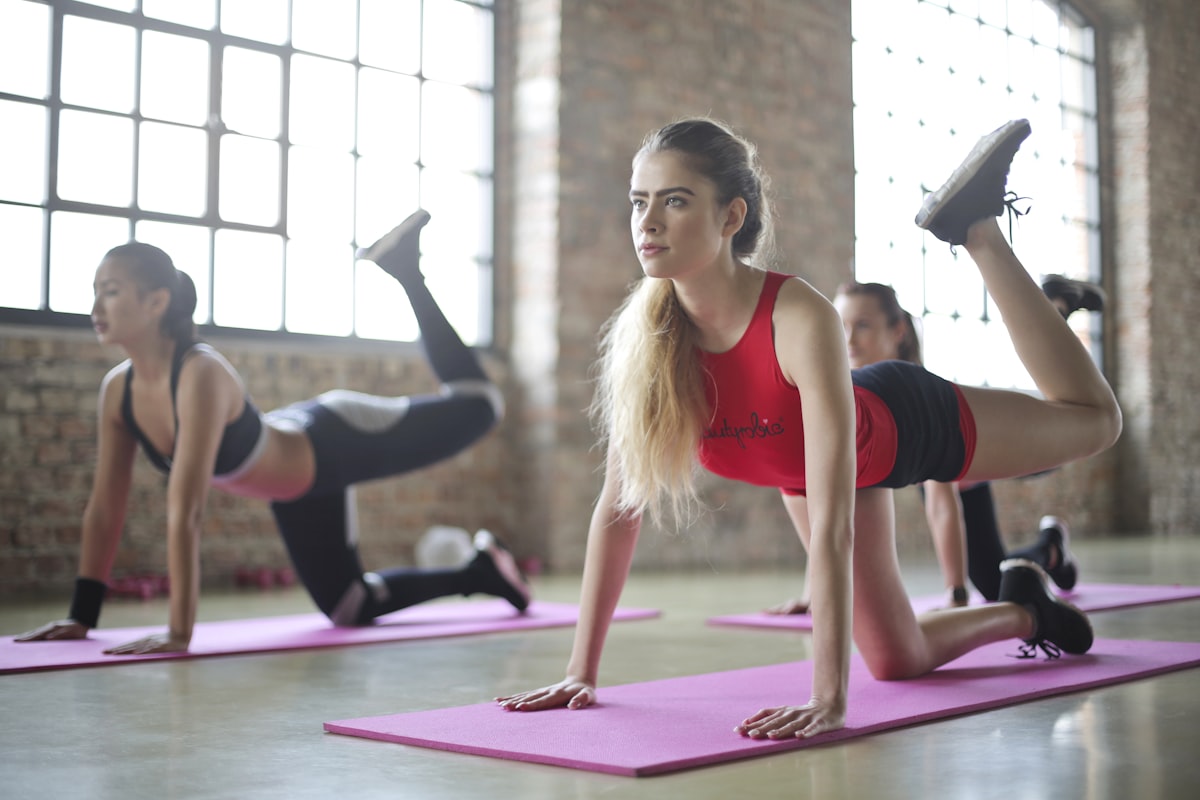
Follicular Phase: Build Intensity and Try New Things. Rising estrogen increases your capacity for intensity, endurance, and skill acquisition. This is the ideal time for heavy lifting, challenging HIIT sessions, trying new workout formats, pushing for personal records, and high-skill activities like dance or martial arts. Your pain tolerance is higher, your coordination is better, and your muscles recover faster. Estrogen’s anabolic effects mean muscle-building stimulus is most effective during this phase.
Ovulatory Phase: Peak Performance. Channel your highest energy into your most demanding workouts. Max effort lifting, sprint intervals, competitive sports, group fitness classes that thrive on energy and social connection. This is your power window. Your nervous system is primed for performance, reaction time is faster, and you can handle more training volume than at any other point in your cycle.
Luteal Phase: Moderate and Steady. As progesterone rises, your body temperature increases and your perceived exertion during exercise goes up – meaning the same workout feels harder than it did two weeks ago. This is physiological, not psychological. Shift toward moderate-intensity steady-state cardio (zone 2), strength training with moderate weights and higher reps, yoga, Pilates, and longer walks. In the late luteal phase (the week before your period), reduce intensity further if PMS symptoms are significant. Your body is already under metabolic stress; adding excessive exercise stress is counterproductive.
What Should You Eat During Each Phase?
Your nutritional needs shift across your cycle because your metabolism, insulin sensitivity, and caloric expenditure change. Eating the same thing every day ignores these fluctuations.
Menstrual Phase Nutrition. Focus on anti-inflammatory, iron-rich foods. You’re losing iron through menstruation and your body is managing higher inflammation levels. Red meat, lentils, spinach, dark chocolate, pumpkin seeds, and bone broth support iron replenishment. Omega-3 rich foods (salmon, sardines, walnuts) and anti-inflammatory spices (turmeric, ginger) help manage cramps and inflammation. Warm, cooked foods are easier to digest than raw foods during this phase. Stay hydrated – your fluid needs don’t decrease even though your activity might.
Follicular Phase Nutrition. Your insulin sensitivity is at its best, so your body handles carbohydrates efficiently. This is when you can eat more carbs (sweet potatoes, rice, oats, fruits) without the blood sugar spikes you might experience later in your cycle. Fresh, light foods feel good – salads, grain bowls, fresh fruits, lean proteins. Support your rising estrogen with phytoestrogen-containing foods like flaxseeds, sesame seeds, and fermented soy. Your gut microbiome is more resilient during this phase, making it a good time to introduce new foods or increase fiber intake.
Ovulatory Phase Nutrition. Continue with lighter, fresh foods. Support liver detoxification of the estrogen peak with cruciferous vegetables (broccoli, cauliflower, Brussels sprouts, kale). Raw vegetables and salads are well-tolerated. Antioxidant-rich foods (berries, leafy greens, citrus) support your body during this metabolically active phase. Fiber is important for helping your body clear excess estrogen through the digestive tract.
Luteal Phase Nutrition. This is where most women struggle. Your basal metabolic rate increases by 100 to 300 calories per day in this phase, so the hunger is real and legitimate. Eat more. Specifically, eat more complex carbohydrates and healthy fats. Your insulin sensitivity decreases, so pair carbs with protein and fat to stabilize blood sugar. Magnesium-rich foods (dark chocolate, pumpkin seeds, avocados) help with the serotonin drop that drives cravings. B6-rich foods (chicken, bananas, potatoes, sunflower seeds) support progesterone production. Calcium and vitamin D intake during this phase has been shown to reduce PMS symptom severity.
The sugar cravings in your luteal phase aren’t weakness. They’re your brain responding to declining serotonin by seeking the fastest serotonin precursor available (sugar). You can satisfy this neurochemical need more effectively with complex carbohydrates and tryptophan-rich foods (turkey, eggs, cheese, nuts) that support sustained serotonin production without the blood sugar crash.
Does Cycle Syncing Actually Work? What Does the Research Say?
The research on cycle syncing specifically is still developing, but the underlying science supporting it is robust.
Studies consistently show that estrogen enhances muscle protein synthesis, increases tendon stiffness (reducing injury risk), and improves exercise recovery. Progesterone does the opposite – it increases protein breakdown, raises body temperature, and reduces exercise efficiency. These aren’t marginal effects. A 2020 systematic review in Sports Medicine found that exercise performance varies by 5 to 12% across the menstrual cycle, with peak performance clustering in the late follicular and ovulatory phases.
Research on ACL injuries provides particularly compelling evidence. Women are 2 to 8 times more likely than men to tear their ACL, and the risk peaks during the ovulatory phase when estrogen is highest and joint laxity increases. This doesn’t mean you should avoid exercise during ovulation, but it does mean warming up thoroughly and being mindful of cutting and jumping movements.
On the nutrition side, studies confirm that basal metabolic rate increases by 5 to 10% during the luteal phase, that insulin sensitivity genuinely decreases, and that carbohydrate metabolism shifts measurably between follicular and luteal phases. A 2023 study in the British Journal of Sports Medicine found that women who periodized their training according to menstrual cycle phase showed greater improvements in strength and body composition compared to women following a standard training program.
How Do You Start Cycle Syncing?
Start by tracking. For 2 to 3 months, track your cycle alongside your energy levels, exercise performance, mood, cravings, and symptoms. Use an app (Clue and Flo are both evidence-based) or a simple spreadsheet. You’re looking for your personal patterns – while the hormonal framework is universal, individual responses vary.
Then make one change at a time. Don’t overhaul your entire diet and workout program simultaneously. Start with adjusting exercise intensity based on your phase. Notice how your body responds. Then layer in nutritional adjustments. Then fine-tune based on what you’re observing.
Accept that cycle syncing is a framework, not a rigid protocol. Some months your ovulation will be earlier or later. Some cycles will be anovulatory. Stress, travel, illness, and sleep disruption all alter your hormonal patterns. Use cycle syncing as guidance that you adjust based on how you actually feel, not as a prescription that overrides your body’s signals.
Does Cycle Syncing Work If You’re on Birth Control?
Hormonal birth control (the pill, patch, ring, hormonal IUD) suppresses your natural hormonal fluctuations. If you’re on combined oral contraceptives, you don’t ovulate and your estrogen and progesterone are maintained at steady, synthetic levels. This means the phase-based hormonal shifts that cycle syncing targets don’t occur in the same way.
That said, many women on hormonal birth control still notice cyclical patterns in their energy, mood, and performance – particularly during the placebo week when synthetic hormone levels drop. You can still benefit from listening to your body’s signals and adjusting your training and nutrition accordingly. The framework is less precise, but the principle of matching your lifestyle to your body’s current state still applies.
If you’re on a progestin-only method (hormonal IUD, mini-pill, implant), you may still ovulate and experience some natural hormonal cycling. Track your symptoms and adjust based on what you observe rather than following a rigid phase-based schedule.
Frequently Asked Questions
How many calories extra should I eat during my luteal phase?
Research suggests your basal metabolic rate increases by 100 to 300 calories per day during the luteal phase. Rather than counting precisely, listen to your hunger signals – they’re reflecting a real metabolic increase. Focus on adding a substantial snack or slightly larger meals with emphasis on complex carbs, protein, and healthy fats rather than restricting to fight the hunger.
Can cycle syncing help with weight loss?
It can support body composition goals by optimizing when you push hardest in training (follicular and ovulatory phases) and when you focus on recovery (menstrual and late luteal). It also helps prevent the restrict-binge cycle that happens when women fight their luteal phase hunger. Working with your cycle instead of against it reduces stress on your body, which indirectly supports metabolic health and body composition.
What if my cycle is irregular?
Irregular cycles make phase-based planning harder but not impossible. Track your basal body temperature (it rises after ovulation) and cervical mucus changes to identify where you are in your cycle. Apps like Natural Cycles use temperature data to pinpoint ovulation. If your cycles are very irregular (consistently shorter than 21 days or longer than 35 days), discuss this with your healthcare provider as it may indicate an underlying hormonal issue worth investigating.
Should men cycle sync too?
Men don’t have a menstrual cycle, but they do have daily testosterone fluctuations (highest in the morning, declining through the day) and may have monthly hormonal patterns, though research is limited. The cycle syncing framework is specific to the female menstrual cycle. Men can benefit from periodized training programs, but the timing considerations are different.
Does cycle syncing work during perimenopause?
Perimenopause makes cycle syncing more challenging because your cycle becomes less predictable and your hormonal fluctuations can be extreme. The principles still apply – adjusting your lifestyle based on how your body feels – but you’ll need to rely more on symptoms and body signals than on counting cycle days. Tracking becomes even more important during perimenopause to identify your shifting patterns.