
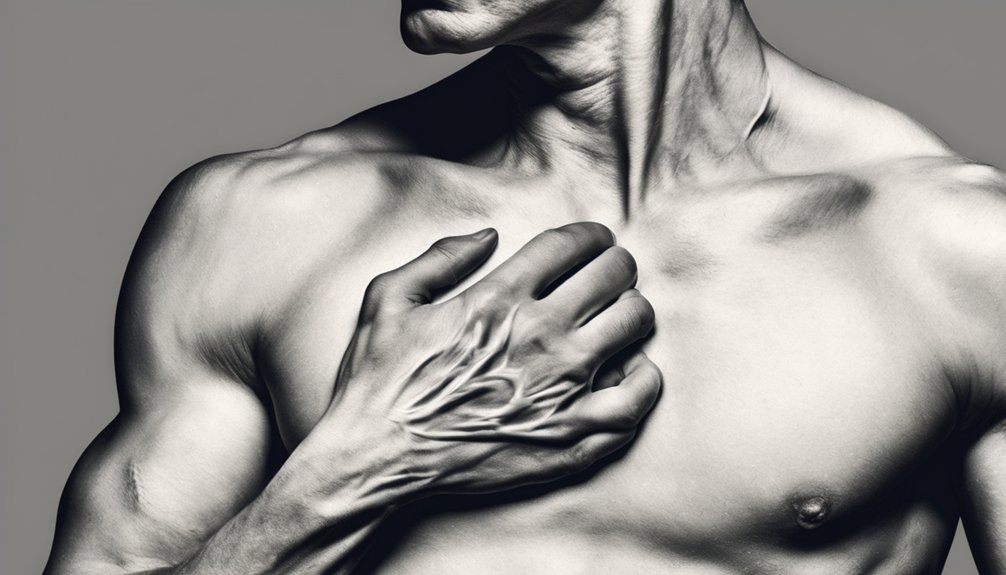

Sharp chest pain on one side can stem from muscle strain, nerve irritation, or heart problems. Muscle pain often worsens with movement and feels localized, while nerve pain may burn or shoot, sometimes causing tingling. Heart-related pain tends to feel like pressure or tightness and can radiate to the arm or jaw. If your pain is sudden, severe, or comes with shortness of breath or sweating, seek immediate help. Understanding these clues helps identify the cause, and exploring further reveals more details.
Common Causes of Sharp Chest Pain on One Side
Although sharp chest pain on one side can be alarming, it often results from non-cardiac causes related to muscles, nerves, or the respiratory system.
Pain that radiates to your back or side can also point elsewhere; watch for these kidney infection early symptoms most people miss.
Muscle strain is a common cause, often stemming from sudden movements, heavy lifting, or poor posture that irritates the chest wall muscles.
Nerve compression can also trigger sharp pain, as nerves around the spine or ribs become pinched or inflamed.
Additionally, issues like costochondritis or respiratory conditions may contribute.
Understanding these causes helps you identify when pain is likely muscular or nerve-related, guiding appropriate responses without immediate cardiac concerns.
Differentiating Between Muscle, Nerve, and Heart-Related Pain
Understanding the differences between muscle, nerve, and heart-related chest pain can help you respond appropriately and seek the right care.
Muscle strain usually causes sharp pain that worsens with movement or pressure, often linked to recent physical activity.
Nerve irritation results in a burning or shooting pain, sometimes accompanied by tingling or numbness, and may follow a specific nerve path.
Heart-related pain tends to feel like pressure, squeezing, or tightness and can spread to other areas like the arm or jaw.
Recognizing these distinct features allows you to better assess your symptoms and decide on your next steps.
When to Seek Medical Attention for Chest Pain
How do you know when chest pain requires immediate medical attention?
If your chest pain comes with shortness of breath, sweating, nausea, or pain spreading to your arm or jaw, seek urgent medical evaluation.
Sudden, severe chest pain or pain accompanied by dizziness, fainting, or palpitations also demands prompt care.
While muscle or nerve pain may ease with movement or rest, heart-related issues often don’t.
Don’t delay if the pain feels different from usual or lasts more than a few minutes.
Recognizing these signs guarantees you get timely help and maintain your freedom to live safely.
Frequently Asked Questions
Can Anxiety Cause Sharp Chest Pain on One Side?
Yes, anxiety symptoms can cause sharp chest pain on one side, especially during panic attacks. You might feel trapped, but recognizing this helps you regain control and freedom from fear, guiding you toward calm and healing.
How Can Diet Affect Chest Pain Symptoms?
You can reduce chest pain symptoms by choosing anti-inflammatory foods and following a heart-healthy diet. These choices help ease inflammation and support your freedom to live pain-free and energized every day.
Is Sharp Chest Pain Hereditary?
Yes, sharp chest pain can run in families due to genetic predisposition. If you have a family history, you should stay vigilant and consult a doctor to manage risks and maintain your health freedom effectively.
Can Poor Posture Lead to Nerve-Related Chest Pain?
Yes, poor posture can cause nerve irritation, leading to chest pain. When you slouch or hunch, you compress nerves and muscles, restricting your freedom to move comfortably and causing that sharp, irritating sensation in your chest.
Are Chest Pain Symptoms Different in Women and Men?
Yes, you’ll notice gender differences in chest pain symptoms—women often experience subtle signs like nausea or fatigue, while men report classic sharp pain. Knowing this helps you take charge of your heart health freely and confidently.