
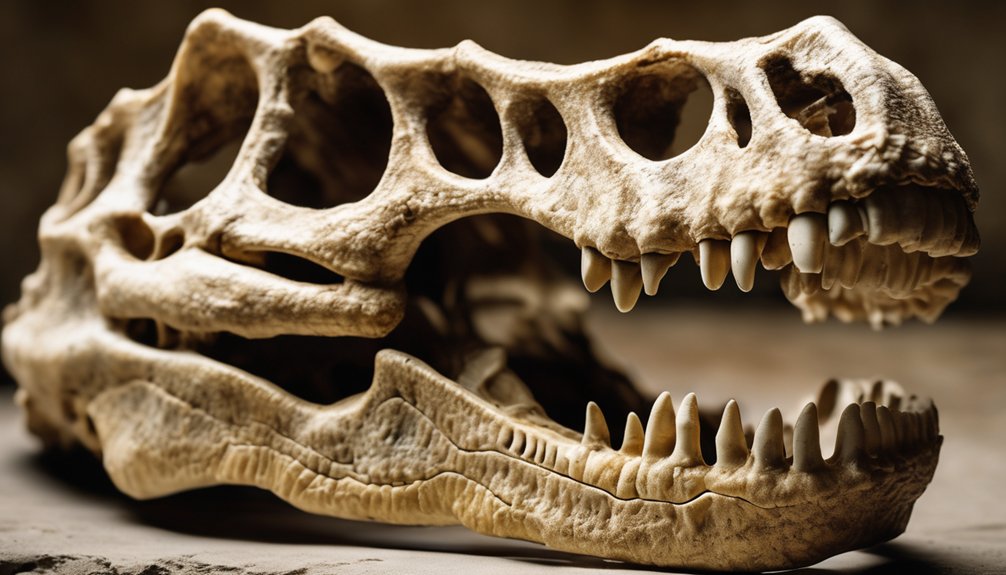

Nigersaurus, discovered in Niger’s Sahara Desert, had a wide, squared jaw packed with over 500 slender teeth arranged in rows. You’d notice its lightweight skull with large openings, which reduced weight while keeping strength. It used this specialized mouth to graze low-lying plants efficiently in lush floodplain environments. Its teeth replaced continuously, supporting constant feeding close to the ground. This dinosaur’s unique adaptations reveal much about herbivore evolution and mid-Cretaceous ecosystems, with further insights available as you explore its biology.
Discovery and Fossil Findings
Although the Nigersaurus was first discovered in the early 1970s, its fossils remained largely unstudied until more complete specimens were found decades later.
You’ll find that the fossil excavation of these remains, primarily in Niger’s Sahara Desert, revealed remarkable details about this dinosaur’s existence.
The paleontological significance of these findings lies in how they expanded knowledge of sauropod diversity during the mid-Cretaceous period.
By carefully analyzing the bones and surrounding sediments, researchers gained insights into the environment Nigersaurus inhabited.
This work has deepened your understanding of prehistoric ecosystems and the evolutionary history of herbivorous dinosaurs.
Unique Anatomy and Teeth Structure
Nigersaurus stands out among sauropods due to its highly specialized anatomy, particularly its skull and teeth.
Its jaw structure is unique, featuring a wide, squared muzzle that supports over 500 slender teeth arranged in rows. This design allowed continuous tooth replacement, reflecting a remarkable stage in dental evolution. The teeth were delicate yet numerous, optimized for efficient browsing.
Unlike typical sauropods, Nigersaurus’s skull was lightweight, with large openings reducing weight while maintaining strength.
Understanding this anatomy offers insight into how evolutionary pressures shaped its feeding apparatus, highlighting adaptations unseen in most other dinosaurs of its kind.
Feeding Habits and Habitat Adaptations
When you examine its feeding habits, you’ll notice that Nigersaurus adapted remarkably well to its environment.
Its grazing behavior involved cropping low-lying plants with a wide, flat mouth filled with hundreds of teeth, allowing efficient feeding close to the ground. This dinosaur’s habitat preferences included lush floodplains, where vegetation was abundant and easily accessible.
These adaptations helped Nigersaurus exploit a niche with minimal competition. Its specialized teeth continuously replaced worn ones, supporting constant grazing.
Frequently Asked Questions
How Long Did Nigersaurus Live During Its Era?
You’d find the Nigersaurus lifespan likely spanned around 10 to 20 years during its era in the mid-Cretaceous period. Embrace curiosity and freedom as you explore how this unique dinosaur thrived millions of years ago.
What Predators Threatened Nigersaurus?
You’d face fierce predator interactions from large theropods like Suchomimus. To survive, you’d rely on your quick reflexes and herd behavior, using these survival strategies to stay free and avoid becoming prey.
How Does Nigersaurus Compare to Other Sauropods?
You’ll find Nigersaurus’ anatomy unique among sauropods, with a lightweight skull and wide mouth perfect for grazing. Its habitat in lush floodplains shaped its feeding style, letting you appreciate its specialized freedom to thrive differently.
What Does the Name “Nigersaurus” Mean?
The Nigersaurus name origin comes from the Niger River region where it was found. You’ll appreciate its significance because it highlights freedom in discovery, revealing a unique dinosaur that challenges what you thought about sauropods.
Were There Any Cultural Impacts or References to Nigersaurus?
You’ll find Nigersaurus holds cultural significance through artistic representation in museums and media, inspiring freedom in creativity. Its unique features spark imagination, encouraging you to explore and express without limits in art and storytelling.