
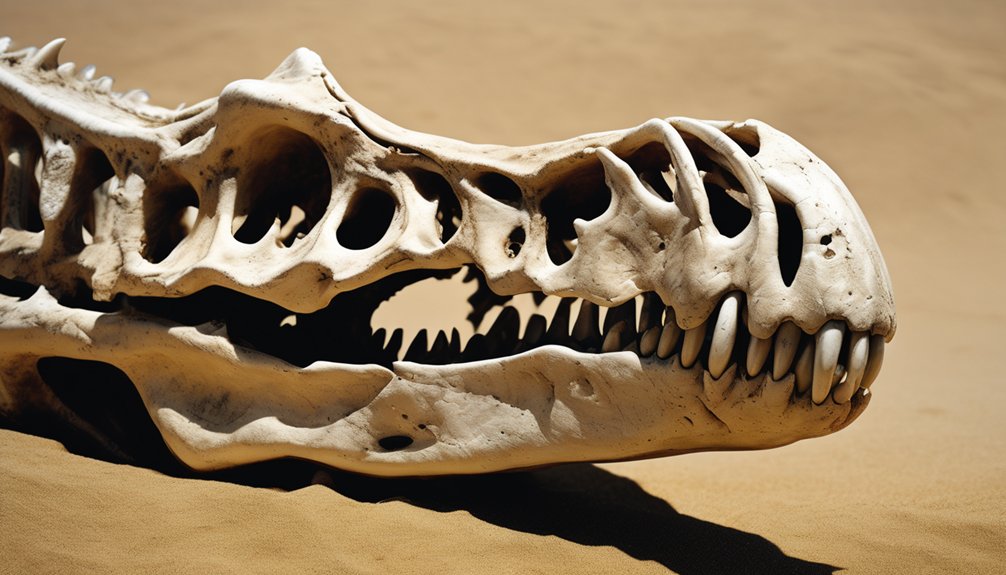

The dinosaur with around 500 teeth is Nigersaurus taqueti, known for its unique dental structure. It had a wide, straight jaw lined with multiple rows of small, replaceable teeth, perfectly suited for grinding tough plant material. These teeth were constantly replaced to maintain effectiveness, allowing it to efficiently crop low-lying vegetation. This dental adaptation is unusual among herbivorous dinosaurs and highlights Nigersaurus’s specialized feeding strategy and evolutionary distinction. Exploring this further reveals more about its distinctive niche.
The Dinosaur With 500 Teeth: Who Was It?
The dinosaur known for having around 500 teeth is called Nigersaurus taqueti.
You’ll find its dental structure unique among dinosaurs, with a wide, straight jaw lined with multiple rows of small, replaceable teeth. This arrangement allowed efficient tooth function, suited to its herbivorous diet.
Each tooth was specialized for grinding plant material, supporting continuous wear and replacement without loss of effectiveness.
As you explore its fossil records, you’ll notice how this complex dental system reflects adaptation to specific feeding habits.
Understanding Nigersaurus’s dental structure helps you appreciate its evolutionary success in its environment.
How Did It Use Its Extraordinary Number of Teeth?
Although Nigersaurus taqueti possessed an extraordinary number of teeth, it used them primarily to efficiently process large amounts of tough plant material.
Its feeding mechanism relied on continuous tooth replacement, ensuring sharp edges for grinding vegetation. This dental adaptation allowed it to consume low-lying plants with ease, using a wide, straight-edged muzzle to crop food close to the ground.
The numerous teeth worked together like a conveyor belt, minimizing wear and maximizing chewing efficiency.
What Makes This Dinosaur Unique Among Its Peers?
Understanding how Nigersaurus taqueti used its numerous teeth to feed sets the stage for recognizing what sets this dinosaur apart from others in its group.
Its unique adaptations include a broad, flat muzzle equipped with hundreds of small, replacement teeth arranged in rows. This structure allowed specialized feeding strategies, such as low browsing on soft vegetation close to the ground.
Unlike many herbivorous dinosaurs, Nigersaurus constantly replaced its teeth, ensuring efficient grazing.
These distinct features highlight its evolutionary path, showcasing a unique niche among sauropods that relied on different feeding techniques to thrive in its environment.
Frequently Asked Questions
When and Where Were Fossils of This Dinosaur Discovered?
You’ll find fossil locations mainly in North America, where discoveries started in the late 19th century. Over time, the discovery timeline reveals how these fossils helped unveil freedom to explore ancient life’s mysteries.
How Long Did This Dinosaur Live During Its Era?
You’d find this dinosaur lived about 100 million years ago, thriving in diverse habitats. Its dietary habits adapted to different plants, letting it roam freely across vast ranges during the Cretaceous period’s long era.
What Was the Size and Weight of This Dinosaur?
You’d find the dinosaur’s size comparison impressive—around 33 feet long—and its weight estimation hovers near 4 tons. That freedom to imagine such massive creatures roaming truly sparks your adventurous spirit.
Did This Dinosaur Have Any Natural Predators?
You likely won’t find many natural predators threatening this dinosaur, given its size and ecological niche. It dominated its environment, so you can imagine it enjoyed relative freedom from attacks.
How Does This Dinosaur Compare to Modern Reptiles?
You’ll notice this dinosaur’s tooth structure is far more complex than modern reptiles’, reflecting specialized feeding habits that allowed it to grind plants efficiently. Unlike many reptiles today, it thrived on diverse vegetation, showcasing remarkable adaptability and freedom.